

Introduction
In today's Indo-Pacific, maritime rivalry extends beyond naval deployments, territorial assertions, or dominance over vital sea routes. It progressively expands into the information realm, where countries vie to assert legitimacy, mold perceptions, sway global opinion, and interpret the significance of occurrences at sea. For the Philippines, the dispute in the South China Sea has thus transformed into a competition not just for maritime rights but also for storytelling. China's grey-zone operations and differing views on international law hinder Manila's capacity to protect its interests. Strategic Communications should be viewed as a crucial element of Philippine maritime security instead of merely a supportive public relations role.
The Information Dimension of Maritime Competition
Grey-zone competition functions beneath the level of traditional armed conflict, utilizing coercion, ambiguity, law enforcement actions, and information distortion to reach strategic goals. In the South China Sea, maritime interactions often involve conflicting narratives regarding sovereignty, legitimacy, and accountability. Information can legitimize a state's presence, depict coercive actions as legal, or weaken an opponent's credibility.
The digital landscape has intensified this competition. Social media, satellite images, live videos, and digital news outlets enable maritime events to gain global importance swiftly. Marites Dañguilan Vitug notes that the maritime conflict has morphed into a fierce narrative struggle, with disinformation threatening the Philippines' democratic information landscape.[1] As a result, the information sphere has evolved into an operational arena where perceptions can affect diplomatic backing, public trust, and strategic conduct.
The Philippines' Maritime Information Challenge
The Philippines faces a disparity in its maritime capabilities and informational impact. China's vast material resources and capacity to maintain rival narratives complicate Manila's attempts to convey its maritime stance. The task goes beyond merely revealing incidents; it is essential to make sure that their legal and strategic importance is appreciated by local audiences, neighboring nations, and global allies.
The 2016 arbitration ruling establishes a significant legal basis. The tribunal established under the United Nations Convention on the Law of the Sea (UNCLOS) dismissed the legal framework for China's assertions of historic rights within the nine-dash line to the extent that they surpassed the Convention's maritime entitlements. Nonetheless, the accolade did not settle sovereignty over land elements or define maritime limits.[2] Articulating these differences is crucial: oversimplification may undermine credibility, whereas silence permits conflicting interpretations to prevail.
The Philippines should tackle disjointed institutional communication, false information, and the conflict between transparency and operational safety. Conflicting communications from military, coast guard, and diplomatic entities can weaken the national stance.
Strategic Communications as a Maritime Force Multiplier
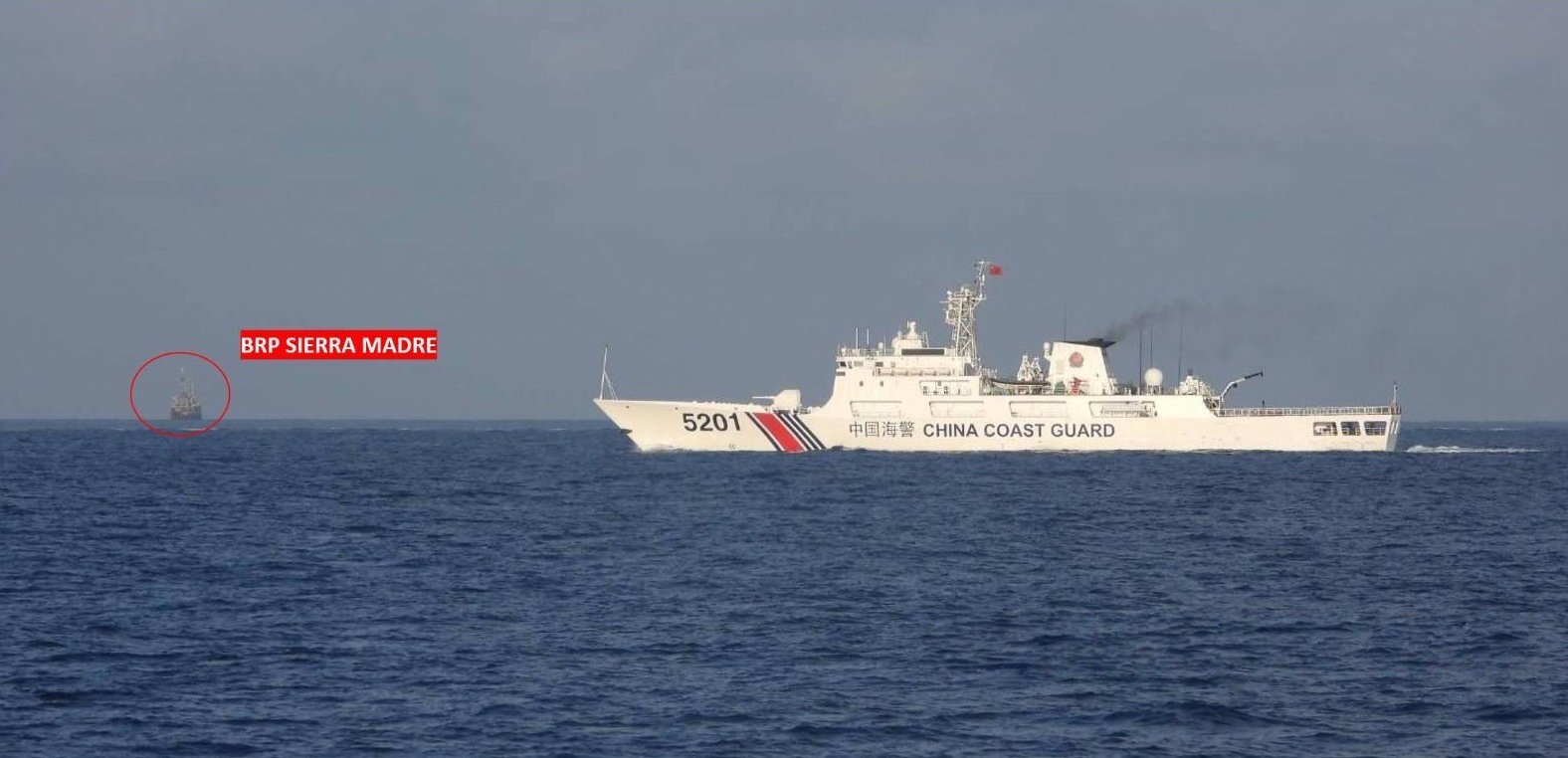
Starting in 2023, Manila's “measured transparency” program aims to reveal aggressive maritime actions by publicly disclosing incidents, images, and official communications. Ibarra and Arugay contend that this method has contributed to building domestic legitimacy and garnering international backing, though it poses risks and remains inadequate as a complete maritime strategy.[3] Its importance is rooted in transforming maritime interactions into data-driven diplomatic and informational efforts.
Launched in July 2024, the Armed Forces of the Philippines' MULAT Communication Plan also seeks to combat misinformation and enhance public awareness of Philippine rights in the West Philippine Sea. The subsequent rollout across AFP commands highlights the significance of uniform and coordinated messaging.[4] These efforts show that communication goes beyond just sharing information post-incident; it's crucial for influencing the strategic landscape.
Still, transparency needs to be adjusted. Distributing validated evidence can counter disinformation and strengthen trust, yet careless sharing could reveal operational specifics or jeopardize upcoming missions. StratCom needs to synchronize its words, actions, and abilities, making sure that public communications mirror policy and operational truths.
Building an Integrated Philippine Maritime StratCom Framework
The Philippines needs an enduring, comprehensive maritime communication system supported by five key priorities.
To begin with, a cohesive strategic narrative must continuously convey national interests, sovereign rights, international laws, regional stability, and the safeguarding of Filipino maritime livelihoods. Secondly, coordination among the Armed Forces of the Philippines, Philippine Coast Guard, Department of Foreign Affairs, National Security Council, and civilian agencies should facilitate prompt, unified communication during maritime events.
Third, communication based on evidence needs to depend on validated visuals, incident records, geographical data, and clear attribution. Fourth, engagement focused on the audience must customize messages for Filipino citizens, ASEAN members, international partners, the media, and maritime communities, while preventing unnecessary escalation. Fifth, information resilience must enhance media literacy, fact-checking, and public trust instead of depending only on reactive responses.
The Enhanced Partnership Framework between the UK and the Philippines from March 2025 provides a pertinent model for collaboration. It clearly highlights strategic communications capacity-building, maritime initiatives, and intergovernmental collaboration as key support areas.[5] These collaborations can aid in building institutional knowledge, crisis communication strategies, and ongoing regional involvement.
Conclusion
The aspect of information in maritime rivalry is closely linked to the Philippines' capacity to safeguard its maritime interests. Transparency efforts and communication strategies are important, but their success relies on consistency, trustworthiness, collaboration, and a strategic aim. Manila should advance from reactive disclosure to a proactive maritime StratCom strategy that links operational evidence with legal certainty, diplomatic efforts, and public resilience. Communication cannot replace maritime capability; it can, nonetheless, amplify its strategic impact. In the West Philippine Sea, the Philippines needs to guarantee that its maritime actions are accompanied by the capacity to convey truths, maintain legitimacy, and influence the global perception of maritime rivalry.
Notes
- Marites Dañguilan Vitug, “China’s Disinformation Narratives in the Philippines,” Perry World House, April 25, 2025, https://perryworldhouse.upenn.edu/news-and-insight/chinas-disinformation-narratives-in-the-philippines/
- Permanent Court of Arbitration, The South China Sea Arbitration (The Republic of the Philippines v. The People's Republic of China), Award, July 12, 2016, https://docs.pca-cpa.org/2016/07/PH-CN-20160712-Award.pdf
- Edcel John A. Ibarra and Aries A. Arugay, “Something Old, Something New: The Philippines’ Transparency Initiative in the South China Sea,” ISEAS Perspective, no. 27 (April 12, 2024), https://www.iseas.edu.sg/articles-commentaries/iseas-perspective/2024-27-something-old-something-new-the-philippines-transparency-initiative-in-the-south-china-sea-by-edcel-john-a-ibarra-aries-a-arugay/
- Armed Forces of the Philippines, “AFP presses fight against WPS misinformation with Complan “Mulat”, July 4, 2024, https://www.afp.mil.ph/news/afp-presses-fight-against-wps-misinformation-with-complan-mulat
- Foreign, Commonwealth & Development Office, “UK-Philippines Enhanced Partnership Joint Framework, March 2025,” March 8, 2025, https://www.gov.uk/government/publications/uk-philippines-enhanced-partnership-joint-framework-march-2025