

Modern national security relies not only on military force but also on shaping public opinion, narratives, and perceptions. As a result, strategic communication has become a crucial tool of national power, linking coordinated communications, information, diplomacy, and other statecraft tools with political goals. According to Mitrović (2019), strategic communication advances national objectives by shaping attitudes and perceptions and aligning communication with broader defense and security initiatives. [1] In a similar vein, Guerrero-Castro (2013) views strategic communication as an interdisciplinary process that combines communication, strategy, and national security to advance national goals and uphold peace. [2] Hence, the contemporary security environment increasingly involves a battle beyond the battlefield, one fought over narratives, credibility, legitimacy, and influence.
What is Strategic Communication?
Strategic Communication constitutes “timely, truthful, accurate communication” to the intended target audiences (civilian and military) in a bid to ensure that these audiences understand/comprehend the host nation/organisation’s intentions, actions, capabilities, and capacities during military/non-military operations or other engagements. It is also a tool of soft persuasion that governments can use to influence select domestic constituencies as well as specific constituencies in foreign countries to achieve stated strategic objectives. [3]
Strategic Communications and the Instruments of National Power
Traditionally, national power has been based on tools like economic resources, military prowess, knowledge, and diplomacy. However, how well they are coordinated and communicated increasingly determines how effective they are. By coordinating national goals, policies, and activities with coherent narratives, strategic communication acts as a force multiplier, increasing the influence of these tools. According to Mitrović (2019), to promote national interests and bolster security, strategic communication must be coordinated with other tools of national power. [4] In a similar vein, studies on digital diplomacy demonstrate how technological developments and digital platforms are changing diplomatic relations and increasing governments' ability to exert influence abroad. [5] States can improve policy coherence, fortify foreign alliances, foster public trust, and influence perceptions by integrating communication across diplomatic, military, economic, and informational realms. Therefore, strategic communication is a cross-cutting tool that increases the efficacy of other aspects of national power rather than only serving as a supporting role.
Operation Sindoor: Strategic Communications in Practice
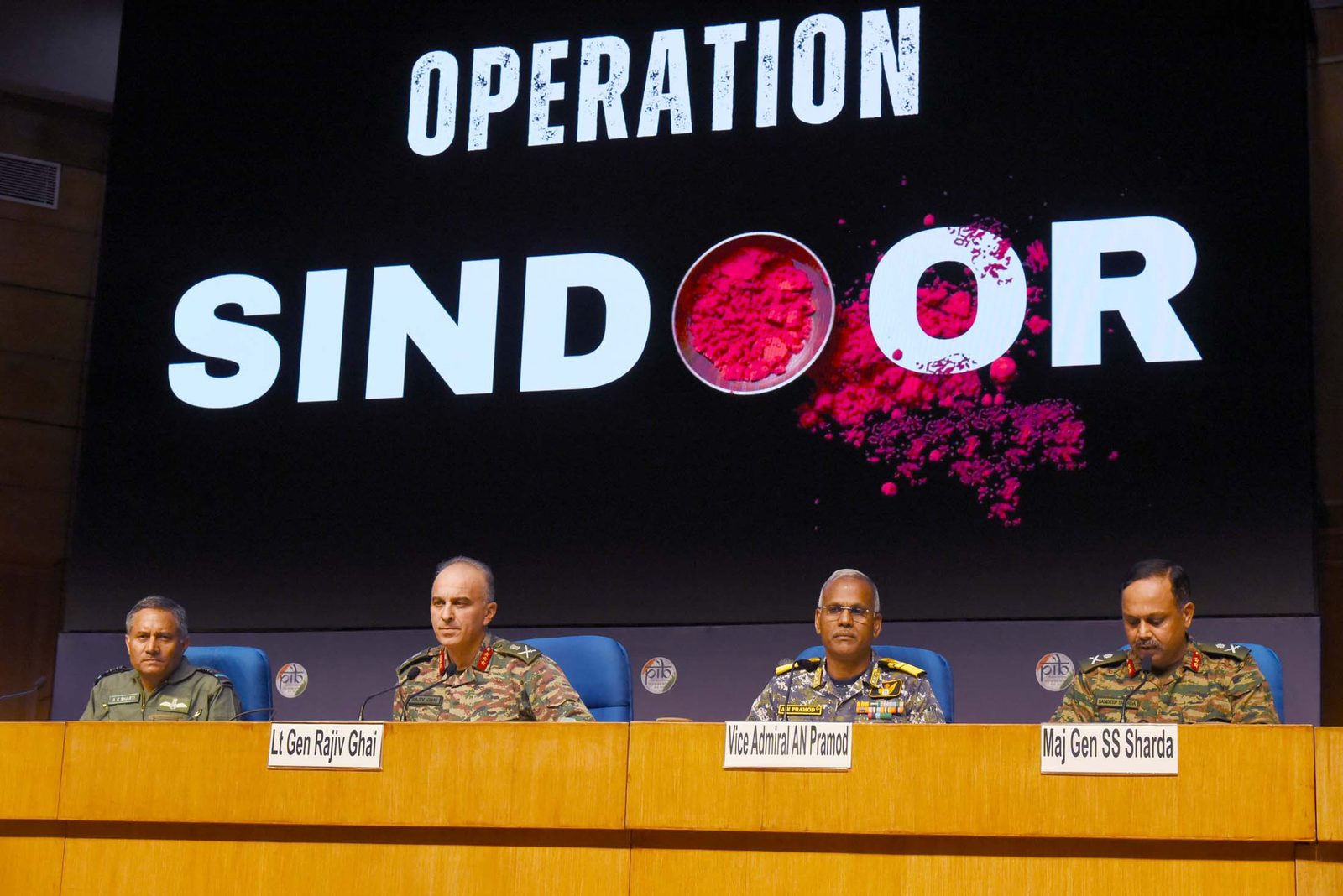
The operational significance of strategic communications is demonstrated by India's response to the information difficulties surrounding Operation Sindoor in May 2025. The administration made concerted attempts to disseminate updates and correct false information in addition to military activities.
The Army, Navy, Air Force, Press Information Bureau, and other government media organizations were brought together in an interdepartmental control center, according to the Ministry of Information and Broadcasting. Coordinated media engagement and information transmission were made easier by the arrangement. Additionally, the PIB Fact Check Unit tried to find and refute false statements that were making the rounds online.[6] More than 1,400 URLs were blacklisted during the operation for spreading deceptive or other harmful content, according to the government's following report.[7] These actions show how digital monitoring, public communication, and institutional collaboration can become essential to crisis management.
The episode also emphasizes a crucial strategic point: communication during military operations needs to strike a balance between operational security and transparency. Premature publication of critical operational details may jeopardize military effectiveness, even while timely reporting might assist preserve public confidence. Thus, Operation Sindoor offers a valuable example for analyzing the connection between military action, information resilience, and public communication.
Conclusion
Strategic communication is now a fundamental tool of national power rather than a supplement to national security. Operation Sindoor showed how information management and military action must work together, especially when enemies actively challenge facts, narratives, and perceptions. It is evident that India must institutionalize strategic communication throughout its national security architecture, bolstered by technical capabilities, interagency cooperation, and credible public involvement. The degree to which India transforms its military, diplomatic, and economic resources into a strategic advantage will increasingly depend on its capacity to convey national intent quickly, accurately, and credibly.
References
- Mitrović, Miroslav. “Strategic Communication in the Function of National Security.” Vojno delo, no. 1 (2019): 41–54. https://doi.org/10.5937/vojdelo1901041M.
- Guerrero-Castro, Cristian E. “Strategic Communication for Security & National Defense: Proposal for an Interdisciplinary Approach.” Connections: The Quarterly Journal 12, no. 2 (Spring 2013): 27–52. https://doi.org/10.11610/connections.12.2.02.
- Banerji, Anuttama. “Strategic Communication.” National Maritime Foundation, December 30, 2025. https://maritimeindia.org/strategic-communication/.
- Mitrović, Miroslav. “Strategic Communication in the Function of National Security.” Vojno delo, no. 1 (2019): 41–54. https://doi.org/10.5937/vojdelo1901041M.
- Pavić, Aleksandar M., Hatidža A. Beriša, and Nenad S. Stajković. “Trends in the Formulation of Instruments of National Power: Digital Diplomacy as a Factor of Change in Modern Diplomacy.” SCIENCE International Journal 4, no. 1 (2025): 25–33. https://doi.org/10.35120/sciencej0401025p.
- Ministry of Information & Broadcasting, Government of India. “Government Debunks Pakistani Propaganda Against India and Armed Forces via Official Fact-Check Unit.” Press Information Bureau, July 30, 2025. https://www.pib.gov.in/PressReleasePage.aspx?PRID=2150213®=48&lang=2.
- Ministry of Information & Broadcasting, Government of India. “Operation SINDOOR: Forging One Force: The Synergy of India’s Armed Forces.” Press Information Bureau, May 18, 2025. https://www.pib.gov.in/PressReleasePage.aspx?PRID=2129453®=48&lang=2.