

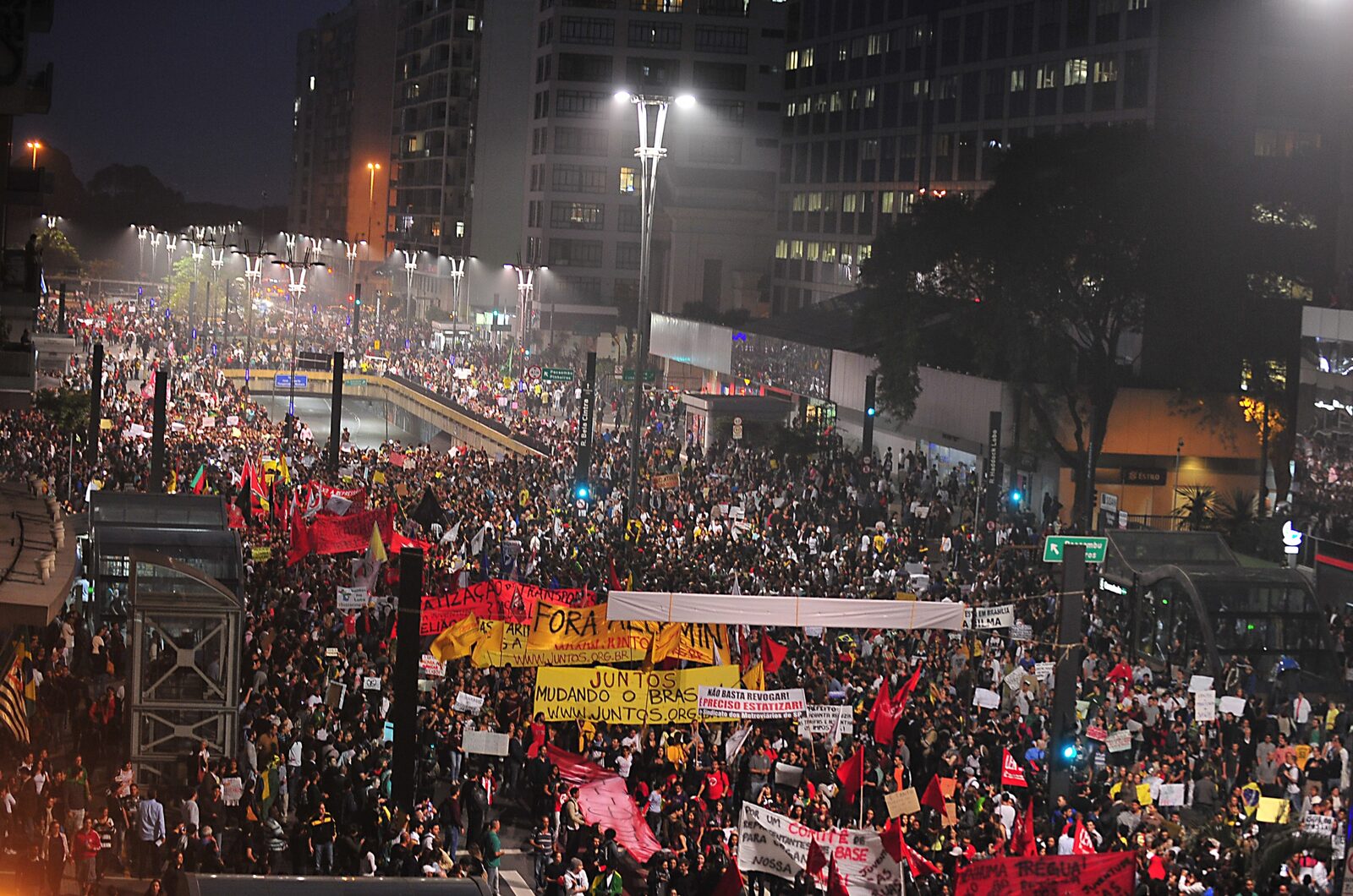
In June 2013, a rise of twenty centavos in bus fares in São Paulo set off the largest street protests Brazil had seen in two decades. Most governments were taken by surprise, yet a research system called EMBERS, built by a team led by Naren Ramakrishnan at Virginia Tech and funded by the United States Intelligence Advanced Research Projects Activity (IARPA), had been reading Brazilian social media throughout the month and tracked the rise and fall of the unrest as it happened.[1] Across ten Latin American countries, the system issued warnings of protest an average of about nine days before the events took place. It did so largely by measuring something that once seemed impossible to count, which was the changing mood of millions of ordinary people writing in public.
That measurement has a name - sentiment analysis, which means using tools to judge whether a piece of text expresses a positive, negative or neutral feeling and often which emotion lies behind it. Applied to millions of posts about a border dispute, an election or a war, it becomes a way of reading how a population feels in something close to real time, and governments, armed forces, markets and political campaigns now treat that reading as a strategic asset.
How a Machine Reads a Feeling
The earliest systems worked from word lists. Each word carried a score, so that 'betrayal' counted as strongly negative and 'relief' as mildly positive, and the software added up the scores in a sentence to reach a verdict. The method was fast but easily fooled. A post that reads 'Great, another ceasefire broken' contains a positive word and expresses anger, and a word-list system would usually get it wrong.
Modern systems rely instead on machine learning, in which software is shown many thousands of examples that people have already labelled as angry, hopeful or fearful, and it gradually learns the patterns that separate one from another. The newest of these are large language models, systems trained on enormous quantities of text, which take in a whole sentence at once rather than word by word and can therefore handle context, negation and a good deal of irony. They can also sort posts by topic and by target, separating anger at a foreign government from anger at one's own, which is precisely the distinction a geopolitical analyst most needs.
The technique has a long research record behind it. In a study published in the Journal of Computational Science in 2011, Johan Bollen, Huina Mao and Xiao-Jun Zeng measured the public mood expressed on Twitter and reported that it predicted the daily rise or fall of the Dow Jones Industrial Average with an accuracy of 87.6 per cent.[2] Later work has questioned how well that result holds over longer periods, but the study persuaded investors and governments alike that collective feeling, measured at scale, carries information about what crowds will do next.
A Fast-Growing Industry with Many Clients
The commercial market reflects that conviction. According to the market research firm Global Industry Analysts, spending on sentiment analytics worldwide stood at about 5.1 billion US dollars in 2024 and is projected to reach about 11.4 billion US dollars by 2030, which would mean the market more than doubles in six years.[3] Most of that money comes from companies tracking their brands, but the same tools, and often the same vendors, serve ministries, intelligence services and political parties.
States were among the earliest and largest users. In October 2013, the newspaper Beijing News reported that more than two million people in China were employed as 'internet opinion analysts', running keyword searches set by their supervisors, compiling reports on what citizens were saying and preparing responses to sudden surges of complaint.[4] Automated sentiment analysis now performs much of this work at a scale no human workforce could match. Democracies use the technique too, though usually for narrower purposes, such as foreign ministries tracking how a policy announcement is received abroad, militaries monitoring local mood in areas where troops are deployed, and election authorities watching for hostile campaigns aimed at their voters.
From Measuring Mood to Managing Narratives
Here the purpose of the technology begins to shift. A narrative is the story a public tells itself about events, such as who is the aggressor in a conflict, whether a government is competent or whether an ally can be trusted. Narrative management is the deliberate effort to shape that story, and sentiment analysis supplies its feedback loop, because it tells the person managing a message, within hours rather than weeks, whether the message is landing, which audiences are hostile and which phrasing softens them.
Used openly, this is ordinary statecraft. A foreign ministry that learns a policy is being misunderstood in a neighbouring country can explain itself more clearly, and a disaster-relief agency that sees fear rising in one district can send reassurance there first. Used covertly, the same loop becomes a tool of manipulation, in which an influence campaign tests dozens of versions of a divisive message, measures which one provokes the most anger and then amplifies the winner through fake accounts. The software is indifferent to which of these purposes it serves, and that indifference is the reason it deserves serious scrutiny.
Where the Readings Go Wrong
Sentiment analysis also has real limits, and policymakers who forget them risk acting on a mirage. People who post about politics are not a fair sample of a nation, since they tend to be younger, more urban and more strongly opinionated than the population as a whole. Organised campaigns can inflate a mood artificially, so that a thousand coordinated accounts look like a groundswell. Sarcasm, local idiom and code-switching between languages still defeat many systems, and a model trained mainly on English will misread a great deal of what is written in Hindi, Tamil or Bengali. The figure on an analyst's dashboard deserves the caution owed to an opinion poll with an unknown margin of error.
What This Means for India
For India, the stakes are unusually high. The country conducts its public life across more than twenty official languages, and its borders, its diaspora and its regional ambitions all make it a frequent subject of foreign influence campaigns. Sentiment tools that read only English capture a thin and unrepresentative slice of Indian opinion, which leaves the state and independent researchers partly blind. Investment in reliable models for Indian languages, clear legal limits on how the state may monitor its own citizens, and independent checks on how such tools are used would allow India to gain the defensive benefits of the technology while protecting the freedoms it is meant to serve.
The protesters in São Paulo in 2013 did not know that a machine was reading their posts, nor that it could see the shape of their anger before the newspapers could. Today far more powerful systems read the moods of entire nations every hour, for purposes that range from defending against hostile propaganda to quietly steering what people believe. Which of those purposes prevails will depend less on the software than on the rules that govern the people who use it, and those rules, in India as elsewhere, have yet to be written with the care the technology demands.
Notes
[1] Naren Ramakrishnan, Patrick Butler, et al., “‘Beating the News’ with EMBERS: Forecasting Civil Unrest Using Open Source Indicators,” arXiv preprint 1402.7035, March 2014, https://arxiv.org/abs/1402.7035.
[2] Johan Bollen, Huina Mao, and Xiao-Jun Zeng, “Twitter Mood Predicts the Stock Market,” Journal of Computational Science 2, no. 1 (2011): 1–8, https://arxiv.org/abs/1010.3003.
[3] Global Industry Analysts, “Sentiment Analytics: Global Strategic Business Report,” 2025, https://m.giikorea.co.kr/report/go1765203-sentiment-analytics.html.
[4] Dong Le, “China Employs 2 Million Microblog Monitors, State Media Say,” BBC News, October 2013, republished by YaleGlobal Online, https://archive-yaleglobal.yale.edu/content/china-employs-2-million-microblog-monitors-state-media-say.