

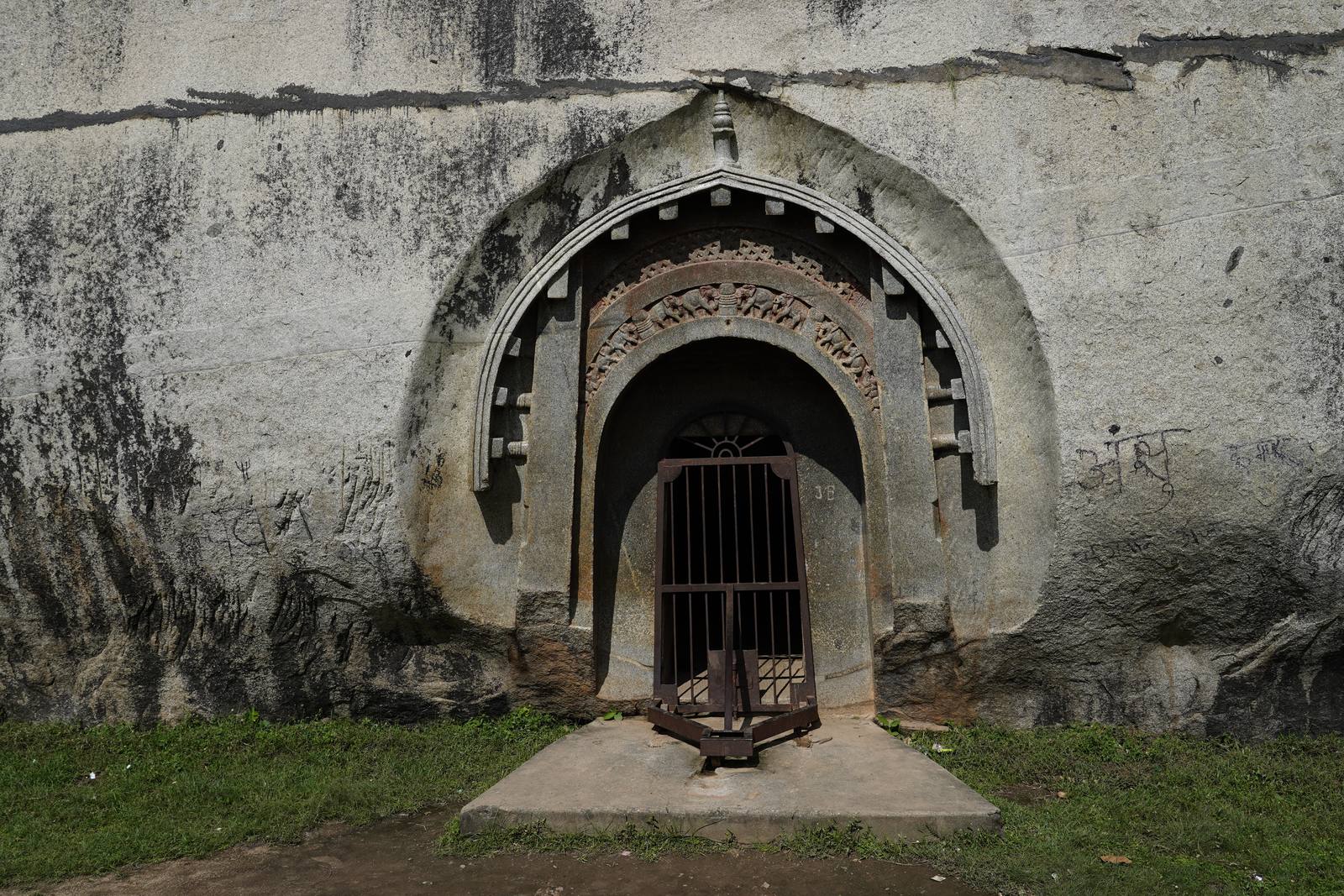
“गूढलेख्येन वा संज्ञाभिर्वा यथादेशं प्रेषयेत्।”
“Through secret writing or by means of signs, the information should be conveyed to its intended destination.”
- Arthashastra, Book I, Chapter 12[i]
Long before the modern idea of an ‘intelligence agency’ emerged, the Arthashastra described an elaborate system of espionage. It did not stop at recommending the use of spies. It envisioned an invisible network of agents placed in hermitages, markets, places of pilgrimage, liquor shops and the private households of powerful men.[ii] Information moved through separate channels, ensuring that individual agents did not necessarily know the wider network of which they were a part.[iii]
This series examines that system from a communication perspective. The question is not only who spied, but how information was gathered, disguised, carried, checked and delivered-and what this tells us about how the text’s authors understood secrecy, trust and deception.
One caution should frame everything that follows. The Arthashastra is traditionally attributed to Kautilya, adviser to Chandragupta Maurya, but scholars continue to debate the date and composition of the surviving text. Patrick Olivelle places the main composition around 50 - 125 CE.[iv] The text therefore tells us what its authors believed an intelligence system should look like. It does not prove that a Mauryan king operated such a system exactly as described.
More Than a War Manual
The Arthashastra is often described as a war manual. That is only partly accurate. Many of its fifteen books deal with administration, revenue, law, diplomacy, and the king's discipline. Warfare forms only one part of a much larger discussion of statecraft.[v]
On the other hand, intelligence seems to be found everywhere in the document. The spies gauge the loyalty of the ministers, spy on the officials, measure public sentiment, keep track of foreign courts, and lay the groundwork for the military operation.[vi] In this way, one can say that the Arthashastra also provides a guide to information collection. The basic idea behind it is that a king who knows more acts better.
Static and Mobile Agents
The intelligence system described in Book I, Chapters 11 and 12, has two broad layers.
The first consists of relatively static intelligence establishments. Five types of agents are embedded within everyday social and economic life: the fraudulent student, the recluse, the householder, the merchant and the ascetic.[vii] They are given resources that allow them to maintain convincing covers while gathering information.
The recluse, for example, may manage agricultural and commercial activities, support other ascetics with the proceeds, and use the proceeds to collect information.[viii] Such agents function as long-term listening posts. Their strength lies in remaining part of the local environment.
The second layer is mobile. Chapter 12 introduces agents such as the satri, trained in skills including palmistry, omens and performance; the daring or reckless tīkṣṇa; the poisoner or rasada; and the wandering nun or bhikṣukī.[ix] Unlike the more settled establishments, these agents move between households, settlements, and political centers.
The text also places intelligence collectors inside the homes of senior officials. Cooks, bath attendants, barbers, bed-makers, entertainers, and servants, including some pretending to be deaf or mute, are instructed to observe the private behavior of powerful men.[x]
Communication-wise, this system is truly amazing. The static agents give consistency and familiarity, whereas the mobile agents give access and mobility. In this way, channels for information transfer are created.
Coded Reports: How Intelligence Travelled Without Being Seen
The Arthashastra describes intelligence as a relay rather than a simple exchange between a spy and the king. Household agents observe. A wandering mendicant woman, whose social role gives her reason to enter various homes, may carry what she learns to an intelligence establishment. Other agents can then be tasked with checking the information, sometimes through signs or a form of sign-writing known as saṃjñālipi.[xi]
If ordinary access is blocked, the text proposes alternative methods. Information may be concealed inside musical instruments carried by performers, transmitted through “secret writing” (gūḍhalekhya), or passed through intermediaries such as door-keepers, bards and courtesans. An agent who attracts suspicion may also withdraw by pretending to suffer from prolonged illness or madness.[xii]
Three communication principles stand out.
First, the channel is disguised as carefully as the message. A wandering nun entering a household or a musician carrying an instrument may appear entirely ordinary. Intelligence therefore moves through everyday social activity rather than through an obviously separate communication system.[xiii]
Second, the network is compartmented. The text states that intelligence establishments and wandering spies should not know one another. This limits how much any individual agent can reveal if discovered or compromised.
Third, information becomes validated. A report can be considered trustworthy when information becomes available from three separate sources. Disagreement among agents indicates questionable information they provide.[xiv]
This is an important point. The Arthashastra is not simply concerned with collecting information; it is also concerned with determining whether that information can be trusted.
Care is necessary when describing these reports as “coded.” The text refers to secret writing and sign-writing, but it does not explain a complete cryptographic system.[xv] What it clearly provides is a principle: sensitive information should reach its intended destination without outsiders recognising it for what it is.
When Communication Becomes Deception
Such an intelligence system could equally well have been employed to control behavior.
For instance, in Book I, Chapter 11, an ascetic could establish his credentials for supernatural insight by prophesying events that agents subsequently carry out.[xvi] Also, spies might organise encounters in public places like pilgrimage sites and assemblies.[xvii] Such performances enable the state to both observe and control opinion.
Other sections of the Arthashastra describe agents entering enemy territory under false identities, creating distrust, spreading misleading information and exploiting divisions within hostile forces.[xviii]
At this point, intelligence moves beyond observation. The network does not simply transmit information-it can also manufacture perceptions.
This distinction is important. Gathering intelligence helps a ruler understand reality; deception attempts to shape the reality someone else understands.
Why These Ideas Outlived the Mauryas
Whatever the precise relationship between the surviving Arthashastra and the Mauryan state, its ideas about intelligence proved remarkably portable. They dealt with issues that any ruler before modern times had to deal with: corrupt officials, misinformation, and possible enmity between neighboring states.[xix]
One of the most notable examples of intellectual inheritance is the treatise called Nitisara by Kamandaka, written between the fourth and eighth centuries AD.[xx] This treatise recognises Vishnugupta as the author of the Arthashastra.[xxi]
Kamandaka also discusses envoys, spies, diplomacy and the importance of gathering information before political or military action.[xxii] Yet later thinkers did not simply reproduce Kautilya word for word. They selected, modified and adapted his ideas to different political environments.[xxiii]
Later writers cited the Arthashastra itself before it gradually fell out of wider circulation and was rediscovered in the early twentieth century.[xxiv] Elements of the Kautilyan image of intelligence also survived in political literature, story traditions and works such as the Mudrarakshasa, in which Chanakya appears as a master of intrigue and political manoeuvre.[xxv]
What remained, therefore, was not necessarily an uninterrupted intelligence agency. What remained was an approach to information: isolate your sources, secure your routes, validate your intelligence, mask your intent, and assume that your adversaries are observing you as well.
That is why the Arthashastra still repays close reading. Its authors understood something that remains central to intelligence even today: intelligence is fundamentally a problem of communication. Information must be collected, transmitted and verified before it can become useful knowledge.
The next part of this series examines the other side of that process-how the same intelligence network could be used not simply to discover the truth, but to deceive an adversary.
Notes
[i] Kauṭilya, Arthaśāstra 1.12.13. Sanskrit text from R. P. Kangle, ed., The Kautiliya Arthasastra, pt. 1, Sanskrit Text with a Glossary, 2nd ed. (Bombay: University of Bombay, 1969); English adapted from Kautilya's Arthashastra, trans. R. Shamasastry (Bangalore: Government Press, 1915). References to the Arthaśāstra give book, chapter and sutra as numbered in Kangle's critical edition.
[ii] Kauṭilya, Arthaśāstra 1.11.4–18, 1.12.9, 1.12.22, 1.13; on agents disguised as vintners and sellers of liquor in an enemy's camp, see bk. 12 in Shamasastry, Kautilya's Arthashastra, 461–74.
[iii] Kauṭilya, Arthaśāstra 1.12.11–12.
[iv] Patrick Olivelle, King, Governance, and Law in Ancient India: Kauṭilya's Arthaśāstra (New York: Oxford University Press, 2013), 29–30. Olivelle dates a further redaction to 175–300 CE. On composite authorship, see Thomas R. Trautmann, Kauṭilya and the Arthaśāstra: A Statistical Investigation of the Authorship and Evolution of the Text (Leiden: E. J. Brill, 1971).
[v] For an outline of the fifteen books, following Kangle, see Pradeep Kumar Gautam, The Nitisara by Kamandaka: Continuity and Change from Kautilya's Arthashastra, IDSA Monograph Series 63 (New Delhi: Institute for Defence Studies and Analyses, 2019), 34–36.
[vi] Kauṭilya, Arthaśāstra 1.10, 1.11.22, 1.12.6–9, 1.12.20, 1.13. See also Roger Boesche, "Kautilya's Arthaśāstra on War and Diplomacy in Ancient India," Journal of Military History 67, no. 1 (2003): 9–37.
[vii] Kauṭilya, Arthaśāstra 1.11.1.
[viii] Kauṭilya, Arthaśāstra 1.11.4–8.
[ix] Kauṭilya, Arthaśāstra 1.12.1–5.
[x] Kauṭilya, Arthaśāstra 1.12.9; see also 1.12.21.
[xi] Kauṭilya, Arthaśāstra 1.12.10–11. In the parallel channel for officials' public conduct, classmate agents carry what the tīkṣṇas observe to the establishments (1.12.7–8).
[xii] Kauṭilya, Arthaśāstra 1.12.13–14.
[xiii] Kauṭilya, Arthaśāstra 1.12.12.
[xiv] Kauṭilya, Arthaśāstra 1.12.15–16. The text prescribes secret punishment or dismissal for agents whose reports repeatedly diverge.
[xv] The text names gūḍhalekhya (1.12.13) and saṃjñālipi (1.12.11) without describing how either worked.
[xvi] Kauṭilya, Arthaśāstra 1.11.13–18.
[xvii] Kauṭilya, Arthaśāstra 1.13; Shamasastry, Kautilya's Arthashastra, bk. 1, chap. 13.
[xviii] See especially Kauṭilya, Arthaśāstra, bks. 12 and 13; Shamasastry, Kautilya's Arthashastra, 461–74.
[xix] For an argument emphasising continuity in Indian strategic thought from the Arthaśāstra to later texts, see Medha Bisht, Kautilya's Arthashastra: Philosophy of Strategy (London: Routledge, 2020).
[xx] For a survey of proposals from the fourth to the eighth century, see Gautam, Nitisara by Kamandaka, 25–27. Upinder Singh places the text between 500 and 700 CE: Upinder Singh, "Politics, Violence, and War in Kāmandaka's Nītisāra," Indian Economic and Social History Review 47, no. 1 (2010): 29–62.
[xxi] Kāmandaka, Nītisāra 1.1.2–8, in The Nitisara by Kamandaki, ed. Rajendralala Mitra, rev. and trans. Sisir Kumar Mitra (Calcutta: Asiatic Society, 1982), quoted in Gautam, Nitisara by Kamandaka, 26, 57. Kamandaka salutes Vishnugupta as the one who drew the essence of polity from the ocean of the Arthaśāstra.
[xxii] Kāmandaka, Nītisāra, sarga 13 (Dūtapracāra and Cāravikalpa), and 10.15.44, in Mitra, Nitisara by Kamandaki, quoted in Gautam, Nitisara by Kamandaka, 38, 70.
[xxiii] Singh, "Politics, Violence, and War," 29.
[xxiv] Richard Davis, review of King, Governance, and Law in Ancient India: Kauṭilya's Arthaśāstra, trans. Patrick Olivelle, H-Asia, H-Net Reviews, April 2015, https://www.h-net.org/reviews/showrev.php?id=41038.
[xxv] Davis, review of King, Governance, and Law. Davis notes that Viśākhadatta, the author of the Mudrārākṣasa, knew the surviving recension of the Arthaśāstra.