
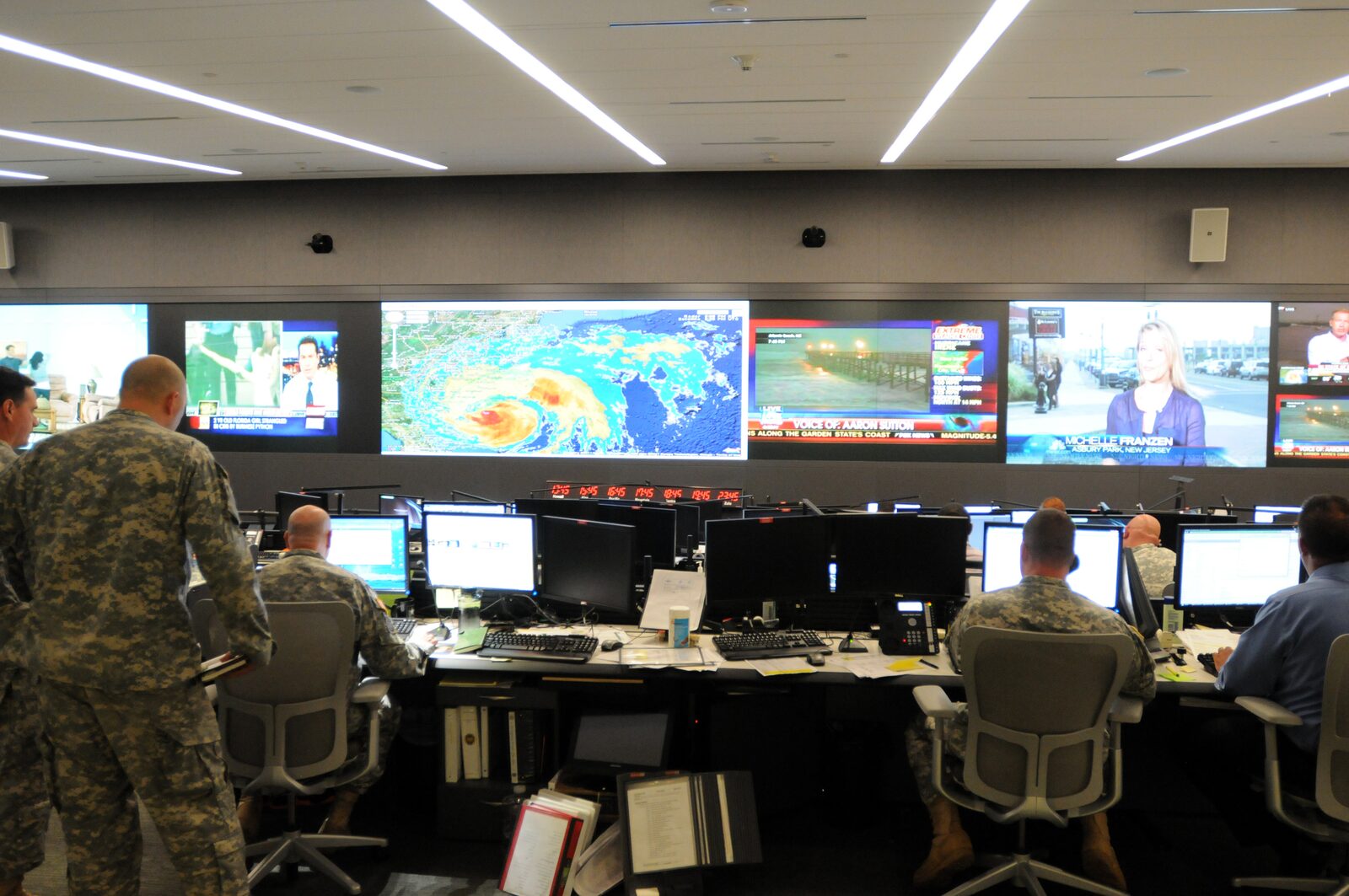
It starts with a notification: mentions are climbing, a familiar term is suddenly everywhere, and the dashboard has turned red. Someone in the communications room asks the obvious question: what is actually happening?
That question marks the point where monitoring stops being enough.
For years, communication teams have invested in tools that track conversations, measure engagement, identify mentions, and monitor sentiment. These systems created visibility at a scale that manual observation never could. Yet visibility alone does not produce understanding. The real value of analytics begins when a system moves beyond reporting activity and starts establishing significance, context, cause, and possible direction.
The next evolution, therefore, is not another dashboard. It is the development of communication analytics as an intelligence function.
A dashboard tells you what happened
Social media monitoring was designed around observation. It answers questions such as how many people mentioned an organisation, which topics are attracting attention, where engagement increased, and whether the tone of conversation changed. These are useful measures, but they describe activity rather than strategic meaning. A rise in mentions might represent genuine interest, a news event, coordinated amplification, a short-lived controversy, or simply a change in platform distribution. The number alone does not distinguish between them.
Research on social media analytics has increasingly treated this gap as a strategic problem. Fitzpatrick and Weissman found that senior communication professionals regarded social media analytics as strategically valuable, while also identifying organisational and capability-related barriers to using the data effectively.[1] Peters and colleagues similarly argue that social media metrics become more useful when connected to broader organisational objectives rather than treated as isolated performance indicators.[2]
The distinction is therefore straightforward but consequential. Monitoring records signals. Intelligence interprets them within a defined context, tests their significance, and places them inside a decision process.
The intelligence layer starts with the data
Strategic intelligence depends on more than collecting a larger volume of information. It requires the integration of different data types and sources, followed by disciplined processing. Social platforms generate text, images, video, hyperlinks, timestamps and interaction data, each with different analytical characteristics. Data is also incomplete, duplicated, inconsistently structured, and shaped by the collection methods available to researchers. Stieglitz and colleagues identify data discovery, collection, preparation, and analysis as distinct challenges within social media analytics.[3]
This is where communication analytics starts to resemble a technical intelligence system. Data ingestion brings information from multiple sources into a common environment. Entity resolution helps determine whether different accounts, organisations, or references relate to the same entity. Metadata provides temporal and contextual information. Historical baselines establish what normal activity looks like. Cross-source verification then helps determine whether an apparent signal is confined to one platform or reflects a wider change.
That last distinction matters more than it first appears. A signal repeated across independent sources deserves a different level of attention from one produced within a single, highly specific digital environment.
From keywords to semantic understanding
The limits of keyword-based monitoring become increasingly apparent as communication becomes more complex. People do not always discuss an issue using the terminology an analyst has selected. A narrative can change vocabulary, acquire new references, move into another language, or appear through images and video rather than text. Literal matching is useful for detection but insufficient for interpretation.
Natural language processing (NLP) has expanded the analytical layer by allowing systems to identify semantic relationships, themes, entities, claims, sentiment, and patterns of language. Topic modelling can reveal recurring subjects without relying entirely on predefined categories. Embedding-based methods can identify conceptually similar content even when the wording differs. Stance analysis goes further, distinguishing whether an actor is supporting, rejecting, questioning, or merely reporting an issue. Multimodal analysis adds another dimension, allowing text, visual material and other content types to be assessed together. Research applying social media analytics to nonprofit communication, for example, has combined sentiment analysis, topic modelling and image classification to examine user-generated content across platforms.[4]
Large language models (LLMs) now add another capability, particularly in classification, extraction, summarisation and the organisation of unstructured information. Their rapid adoption, however, should not be confused with analytical certainty. Ziems and colleagues found substantial variation in LLM performance across computational social science tasks, reinforcing the importance of task-specific evaluation and human oversight.[5]
The practical advantage is not that the machine becomes the analyst. It is that the analyst gains a much larger field of view.
From alerts to early warning
The more important transition occurs when analytics starts examining movement over time.
A monitoring platform might flag that mentions have risen by 40 per cent. An intelligence system should ask whether this is unusual, whether the increase is accelerating, which themes are responsible, who is introducing them, and whether the same pattern appeared during earlier events. This requires temporal modelling, anomaly detection, change-point analysis and historical comparison.
These methods introduce the idea of a baseline. Without one, almost any unusual day looks significant. With one, the system begins to distinguish routine volatility from a genuine change in behaviour. A sudden departure from a normal pattern might justify investigation. A gradual but sustained shift could indicate something more structural.
Forecasting introduces another level of complexity. It is useful for estimating possible trajectories, but forecasting is not explanation. Two variables moving together does not prove that one caused the other. Research on social media timing demonstrates the value of causal methods in distinguishing the effect of a particular factor from simple association.[6] For communication teams, that distinction has practical consequences. Acting on a correlation as though it were a cause risks solving the wrong problem.
Strategic intelligence should therefore expose uncertainty rather than conceal it. A useful assessment should tell decision-makers not only what the model detects but also how confident the system is and what evidence supports that assessment.
Communication analytics is becoming an intelligence stack
The architecture behind this process is changing. Data collection sits at the bottom, followed by processing and analytical models. Above it sits a knowledge layer, where entities, events, topics, sources, and historical observations are connected. The final layer is decision support.
This architecture matters because strategic information rarely exists in a single dataset. A developing issue might appear first in a niche online community, gain attention on a mainstream platform, enter the news cycle, and then return to social media in a different form. Treating each occurrence separately creates fragmented analysis. Connecting them creates an evidential chain.
There is also a new complication. The information environment itself is becoming increasingly AI-mediated. Recommendation systems determine what users encounter, generative tools increasingly assist in producing content, and automated accounts can alter the volume and character of online activity. The Oxford Internet Institute has highlighted recent research showing that AI-assisted communication systems themselves can introduce subtle shifts in the framing of contested content, raising questions about how much of the information environment is being shaped by human actors alone.[7] The implication for analysts is significant: future monitoring systems will need to assess not only what content says but also how content was produced, distributed, and amplified.
The human analyst becomes more important
Greater automation does not remove the need for judgement. It changes the point at which judgement enters the process.
An analyst still needs to ask whether the dataset is representative, whether a classification is reliable, whether an anomaly has an external explanation, and whether a model is detecting a meaningful pattern or an artefact of the data. Automated methods are powerful precisely because they allow researchers to process volumes of information that would otherwise be unmanageable. They remain dependent on validation, methodological discipline and subject knowledge. Grimmer and Stewart make this point clearly in their work on automated text analysis, arguing that computational methods should support substantive interpretation rather than replace it.[8]
This becomes particularly important as generative AI enters communication workflows. A system that produces a polished summary in seconds is useful. A system that produces a polished summary from poorly collected or incorrectly classified evidence is dangerous to decision quality.
The strongest model is therefore not fully automated. It is a human-machine system where machines process scale, identify patterns, and surface anomalies, while analysts test those findings against context and evidence.
From monitoring to strategic intelligence
The evolution of communication analytics is ultimately a change in purpose. Monitoring asks what is being said. Advanced analytics asks what pattern is emerging. Strategic intelligence asks what the pattern means, how reliable the assessment is, what might happen next, and which decision should be informed by it.
That is a higher standard.
The communication function no longer needs more information for its own sake. It needs better discrimination between signal and noise, stronger evidence chains, faster recognition of change, and a clearer understanding of uncertainty. The goal is not to predict every development, nor to automate judgement. It is to ensure that important developments are recognised early and examined with enough rigour to support action.
The next generation of communication analytics will therefore look less like a reporting dashboard and more like an intelligence system. It will collect, classify, connect, compare and test. More importantly, it will give communication teams something monitoring alone cannot provide: a structured understanding of what is changing in the information environment, why it matters, and where attention should go next.
Notes
[1] Kathy R. Fitzpatrick and Paula L. Weissman, “Public Relations in the Age of Data: Corporate Perspectives on Social Media Analytics (SMA),” Journal of Communication Management 25, no. 4 (2021): 401–416, https://doi.org/10.1108/JCOM-09-2020-0092.
[2] Kay Peters, Yubo Chen, Andreas M. Kaplan, Björn Ognibeni, and Koen Pauwels, “Social Media Metrics: A Framework and Guidelines for Managing Social Media,” Journal of Interactive Marketing 27, no. 4 (2013): 281–298, https://doi.org/10.1016/j.intmar.2013.09.007.
[3] Stefan Stieglitz, Milad Mirbabaie, Björn Ross, and Christoph Neuberger, “Social Media Analytics: Challenges in Topic Discovery, Data Collection, and Data Preparation,” International Journal of Information Management 39 (2018): 156–168, https://doi.org/10.1016/j.ijinfomgt.2017.12.002.
[4] Daniela Bernardi, “Social Media Analytics for Nonprofit Marketing: #Downsyndrome on Twitter and Instagram,” Journal of Philanthropy and Marketing 27, no. 3 (2022): e1739, https://doi.org/10.1002/nvsm.1739.
[5] Caleb Ziems, William Held, Omar Shaikh, Jiaao Chen, Zhehao Zhang, and Diyi Yang, “Can Large Language Models Transform Computational Social Science?” Computational Linguistics 50, no. 1 (2024): 237–291, https://doi.org/10.1162/coli_a_00502.
[6] Lauri Valkonen, Jouni Helske, and Juha Karvanen, “Estimating the Causal Effect of Timing on the Reach of Social Media Posts,” Statistical Methods & Applications 32, no. 2 (2023): 493–507, https://doi.org/10.1007/s10260-022-00664-z.
[7] Sandra Wachter, Brent Mittelstadt, Chris Russell, Kaivalya Rawal, and Stratis Tsirtsis, “AI-Powered Social Media Can Subtly Manipulate Opinion at Scale, New Study Finds,” Oxford Internet Institute, University of Oxford, July 6, 2026.
[8] Justin Grimmer and Brandon M. Stewart, “Text as Data: The Promise and Pitfalls of Automatic Content Analysis Methods for Political Texts,” Political Analysis 21, no. 3 (2013): 267–297, https://doi.org/10.1093/pan/mps028.