

From the ancient employment of psychological operations and propaganda, information warfare has developed into a multifaceted struggle over facts, narratives, perceptions, and decision-making. Modern information warfare includes cyber operations, misinformation, electronic warfare, intelligence, social media, and the strategic management of narratives, whereas propaganda has historically aimed to sway public opinion. While contemporary analyses show how networked sensors, commanders, and weapons are changing modern battlefields, ScienceDirect defines information warfare broadly as actions intended to use information and information systems for military gain. [1] Conflicts are waged not only through physical action but also through the struggle to shape how events are perceived, as shown by the growing importance of narrative control and public communication. [2]
From Propaganda to Psychological Warfare
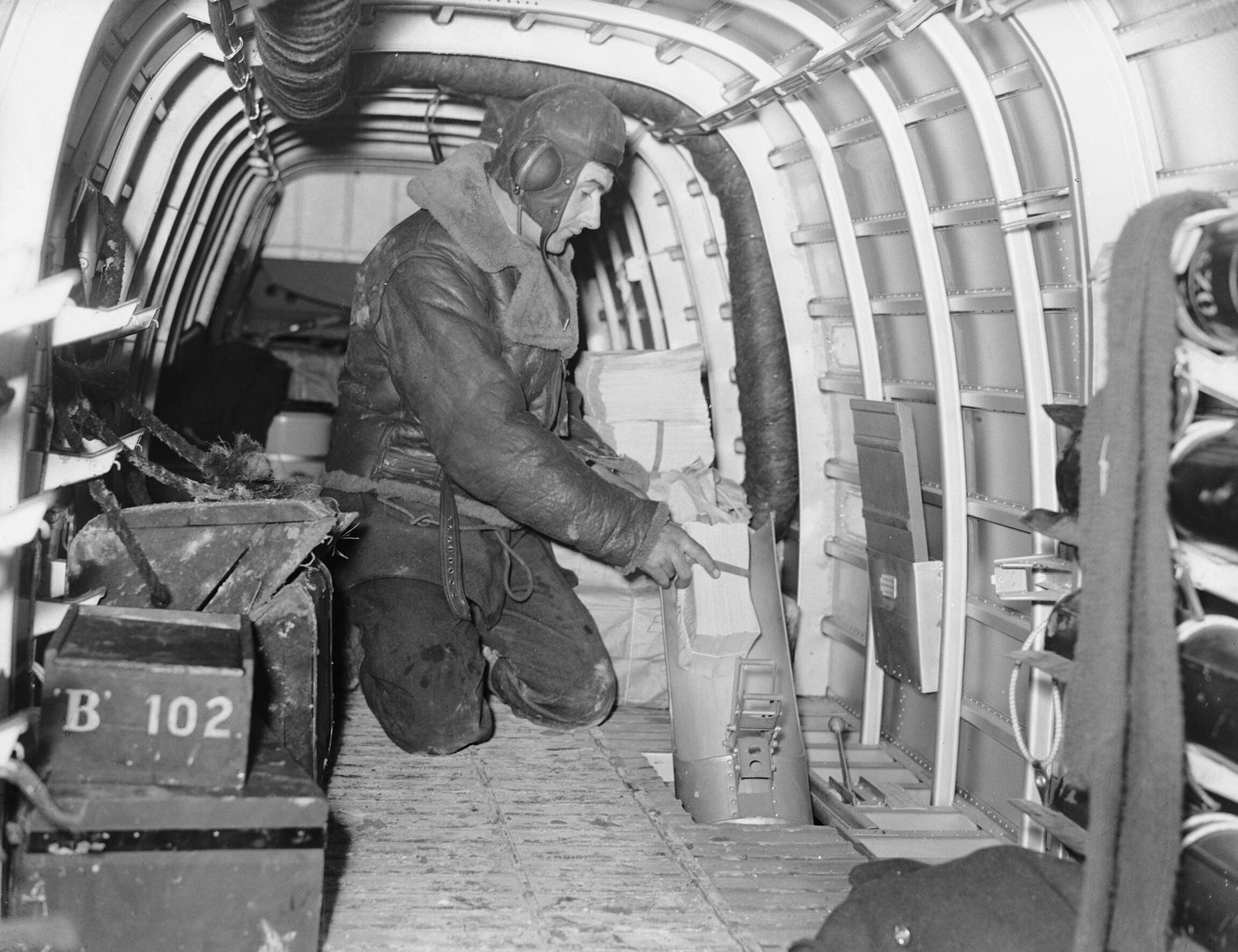
During a fight, propaganda was one of the first organized tools for influencing public opinion. Its goal was to affect attitudes, morale, and behavior in addition to disseminating information through everything from rumors and pamphlets to radio broadcasts and leaflets. This strategy eventually evolved into psychological warfare, a broader approach that integrated economic, political, and military tactics with propaganda to reduce an enemy's will to fight while bolstering allies' and one's own populace's resolve. [3] This process is demonstrated by historical experience: both Allied and Axis governments used broadcasts, movies, posters, and pamphlets to boost morale, sway opinions, and weaken the opponent throughout World War II. [4] These strategies were later extended into a worldwide struggle for ideology, influence, and persuasion during the Cold War, which laid crucial groundwork for the current information landscape.
The Information Revolution Changes Warfare
The communication, comprehension, and contestation of disputes have been profoundly transformed by the information revolution. A highly networked environment where soldiers, civilians, journalists, platforms, and enemies can all concurrently create and disseminate narratives has replaced the essentially one-way communication paradigm of warfare, when states and militaries controlled the flow of information. The increasing significance of data, connectivity, and information in influencing military operations and strategic results is highlighted by research on the information revolution in contemporary combat. [5] Due to this change, speed is now a crucial operational challenge. Instead of waiting for confirmed accounts after operations are over, military organizations need to communicate more and more while events are happening. [6] As a result, the first narrative can become strategically significant: even when later data adds more complexity, the actor who develops an initial interpretation of an event may influence public discourse and perceptions in the future. Therefore, the ability to communicate believable narratives quickly and effectively is becoming more and more important in order to gain an information edge. [7]
From Information Operations to Information Warfare
The shift from individual information-related actions to their coordinated use as part of a larger military plan is reflected in the transition from information operations to information warfare. While information warfare refers to the larger strategic conflict in which information itself becomes both an instrument and an objective, information operations can be defined as the integrated use of information-related capabilities to influence, disrupt, or shape adversary decision-making. [8] Psychological operations, cyber operations, electronic warfare, military deception, operations security, and strategic communications can all be combined in modern information warfare. According to NATO doctrine, these are different but complementary skills in modern military operations. [9]
Electronic warfare can impact communications and other uses of the electromagnetic spectrum, cyber operations can interfere with information systems, and psychological operations aim to manipulate perceptions and behavior. [10] While influence operations alter views across various audiences, deceit and denial can raise questions about goals. As a result, rather than being viewed as a distinct supporting role, information impacts are becoming more and more integrated with actual military operations. [11]
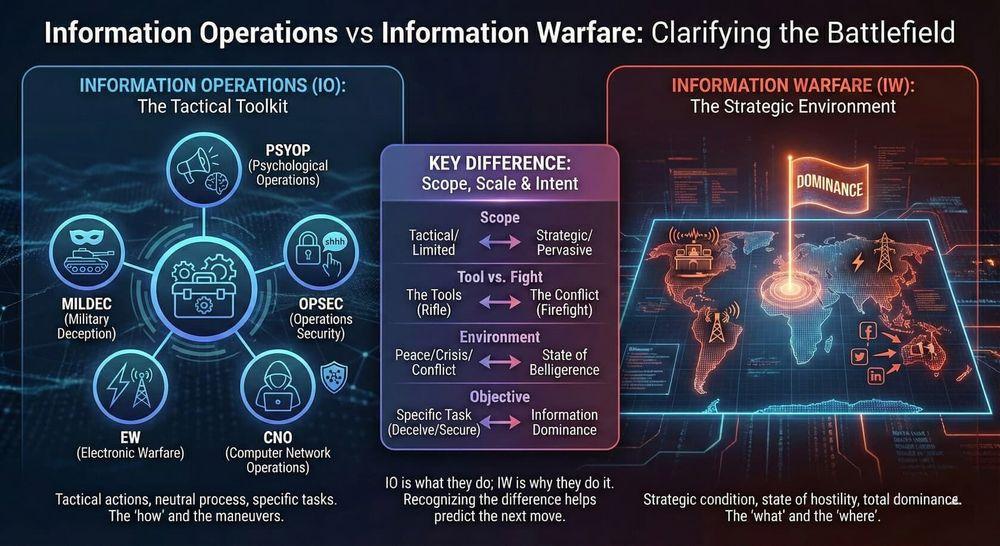
Strategic Communications: From Messaging to Strategy
From merely creating messages to purposefully coordinating communication with more general organizational and strategic goals, strategic communications represents a substantial change. Strategic communication is intentional, audience-focused, and focused on reaching specific goals through coordinated communication, in contrast to propaganda, which is frequently linked to persuasion, selected information, and hidden aims. [12] Thus, it goes beyond creating an engaging story to include audience analysis, message formulation, channel selection, coordination, and evaluation. This process has become more dynamic in the digital age because communication is interactive, multidirectional, and able to provide instant responses, necessitating that organizations modify messages as conditions change. [13] Coherence between words and actions is also necessary for strategic communication; an organization's credibility depends on how well its policies, behavior, and actions support its stated narrative in addition to what it communicates. In this way, propaganda as a persuasive technique has evolved into a more comprehensive framework for managing relationships, information, credibility, and strategic goals through strategic communications.
The Military Dimension: Winning the Cognitive Battlespace
The human mind is now at the center of military competition because of the rise of information warfare. Beyond swaying public opinion, cognitive warfare aims to influence enemies, populations, and decision-makers' perceptions of events, information processing, and decision-making. Cognitive warfare advances psychological and information warfare through digital technologies and artificial intelligence, making the importance of people on the battlefield increasingly recognized. [14] This provides a battlefield where military forces can use perception, morale, trust, and decision-making in addition to physical targets.
To interfere with an adversary's decision-making process or take advantage of weaknesses, cognitive effects can be synchronized with cyber operations, electronic warfare, deception, and kinetic action. Given that future battles are likely to require not only tactical superiority but also cognitive resilience, quick narrative response, and the capacity to shield decision-making from manipulation, this emergent factor is especially pertinent to India. [15]
Contemporary Challenges
Strategic communications currently functions within an informational landscape marked by rapidity, disunity, and ongoing information clutter. The growth of social media and digital platforms enables messages to be quickly created, altered, and shared, complicating the ability of institutions to uphold a consistent narrative.[16] For defense organizations, the difficulty goes beyond combating disinformation: cyberattacks can interrupt communication systems, and adversarial parties might take advantage of information voids to weaken institutional trust and decision-making processes. Consequently, strategic communication should stay aligned across military operations, public messaging, and various communication platforms. The National Maritime Foundation also highlights the increasing significance of strategic communication in navigating the modern information landscape and promoting national security goals.[17] In this context, credibility, consistency, speed, and resilience are crucial, not only for effective communication but also to stop opponents from influencing perceptions before correct information can reach the public.
Conclusion
The shift from propaganda to strategic communications marks a profound change in the nature of information warfare. Originally focused on influencing morale and public opinion, this discipline has evolved into an integrated battlespace that encompasses cyber operations, electronic warfare, psychological maneuvers, deception, cognitive impact, and kinetic force. In this landscape, information is no longer just a supporting tool but a strategic resource capable of shaping perceptions, decisions, and outcomes. Consequently, modern militaries must balance speed with credibility, technical prowess with cognitive resilience, and communication with action. The future of conflict will depend increasingly on the capacity to secure, exploit, and strategically disseminate information.
References
- ScienceDirect. “Information Warfare.” ScienceDirect Topics. Accessed September 22, 2026. https://www.sciencedirect.com/topics/computer-science/information-warfare
- Firstpost. “The Battle Beyond the Battlefield: Time for India to Master Information Warfare.” Firstpost. Accessed September 22, 2026. https://www.firstpost.com/opinion/the-battle-beyond-the-battlefield-tome-for-india-to-master-information-warfare-14039520.html
- Encyclopaedia Britannica. “Psychological Warfare.” Encyclopaedia Britannica. Accessed September 22, 2026. https://www.britannica.com/topic/psychological-warfare
- Bekes, Mario. “The Evolution of Propaganda in Psychological Warfare: A Comparative Analysis of World War II, the Cold War, and the Modern Era.” Mario Bekes. Accessed September 22, 2026. https://www.mariobekes.com.au/the-evolution-of-propaganda-in-psychological-warfare/
- Berman, Eli, Joseph H. Felter, Jacob N. Shapiro, and Vestal McIntyre. Small Wars, Big Data: The Information Revolution in Modern Conflict. Princeton, NJ: Princeton University Press, 2018.
- Mishra, Devsena. “Information Warfare Is Now a Potent Weapon.” IMR Media, 2022. https://imrmedia.in/information-warfare-is-now-a-potent-weapon/.
- Kuehl, Dan. “The Information Revolution and the Transformation of Warfare.” In The History of Information Security, 821–32. Elsevier, 2007. https://www.sciencedirect.com/science/chapter/edited-volume/abs/pii/B9780444516084500304
- OSavul. “Information Operations vs Information Warfare: What Is the Difference?” OSavul. Accessed September 23, 2026. https://www.osavul.cloud/blog/information-operations-vs-information-warfare
- North Atlantic Treaty Organization. Allied Joint Doctrine for Information Operations (AJP-3.10). NATO Standardization Agency, November 2009. NATO AJP-3.10 PDF
- North Atlantic Treaty Organization. “Electromagnetic Warfare.” NATO. Accessed September 23, 2026. NATO — Electromagnetic Warfare
- North Atlantic Treaty Organization. “NATO’s Approach to Counter Information Threats.” NATO, October 18, 2024. NATO — NATO’s Approach to Counter Information Threats
- Ekpuk, Utibe. “What Is the Difference between Strategic Communications and Propaganda?” Sola Abulu & Associates, November 13, 2024. https://www.solaabuluassociates.com/what-is-the-difference-between-strategic-communications-and-propaganda/
- Monash University Indonesia. “Strategic Communications in a Digital Era: 9 Steps in Developing an Effective Communication Strategy.” Monash University, February 20, 2025. https://www.monash.edu/indonesia/news/strategic-communications-in-digital-era-steps-in-developing-effective-communication-strategy
- Minhas, Sukhbir Kaur. “Cognitive Warfare: Key Aspects.” Issue Brief, Manohar Parrikar Institute for Defence Studies and Analyses (MP-IDSA), August 18, 2025. https://idsa.in/publisher/issuebrief/cognitive-warfare-key-aspects
- Shivane, A. B. “Cognitive Warfare: India’s Strategic Imperatives in the Age of Mind Games.” CNAWS, May 26, 2026. https://cnaws.in/research-papers/cognitive-warfare-india-s-strategic-imperatives-in-the-age-of-mind-games
- Lipińska, Justyna. “Strategic Communication in the Face of Contemporary Threats to the Information Environment.” Humanities and Social Sciences Quarterly 28, no. 4 (2021): 59–69. https://doi.org/10.7862/rz.2021.hss.31.
- Banerji, Anuttama. “Strategic Communication.” National Maritime Foundation, December 30, 2025. National Maritime Foundation article