

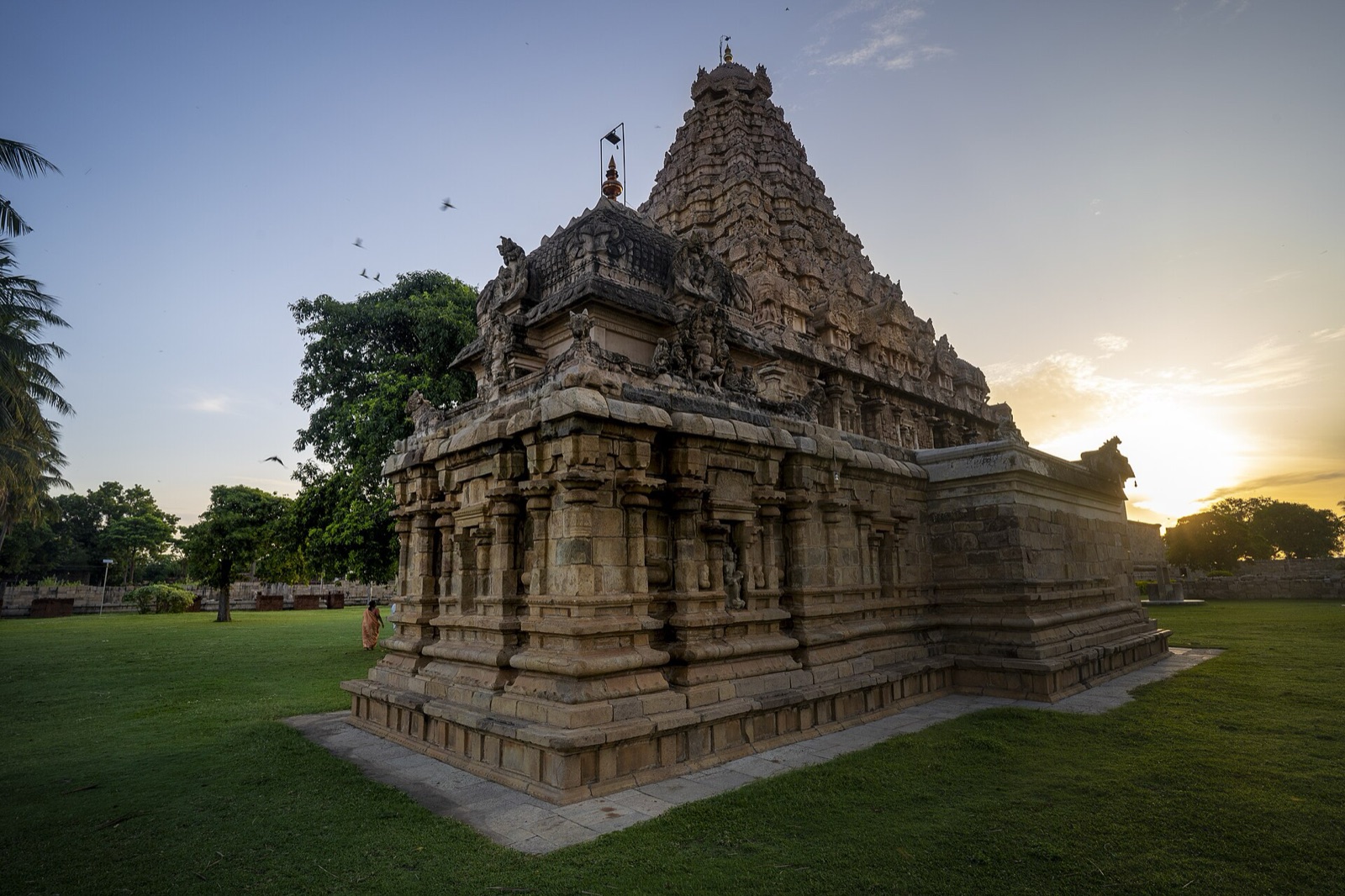
If power cannot be seen, it cannot be felt. But the Cholas, whose homeland was on the Kaveri delta and Coromandel coast, faced the problem of being present at places that they did not control: Southeast Asian ports, trading towns of the Bay of Bengal, and the South China Sea. This article explores the Cholas’ use of strategic communication during their maritime expansion as an extension of their political power across the Bay of Bengal and into the broader maritime world. How did the Cholas communicate their presence at places far from the control of their armies?
A warning should precede what follows. “Strategic communication” is a framework developed for analysis of contemporary politics applied carefully to historical records. The Chola sources do not have such a concept, and the article does not claim that the Cholas had an apparatus for communication. However, the use of the framework allows to structure the evidence according to five stages: Message → Medium → Audience → Reach → Sustained Relationship.
Maritime Power as Strategic Communication
Communication between states is performed not only by speech but also by actions. A fleet setting sail from the port, an envoy received in the court, the settlement of a merchant community and an inscription announcing the success of a war convey to observers the information about the possessor of power, the range of his power and his intentions. At sea, it is more important than on land, because a maritime power cannot control every coast. For the people living far away, knowledge about it would come from the demonstration of power, contacts and reputation.
The Chola case is an illustration to this point. Their audiences were diverse: neighbouring rulers, political authorities of other states, merchants, religious organizations, foreign courts and maritime communities. The same action would mean something else to every of them: a rival would see in the naval expedition a threat, a merchant would see there were signs of safety and danger for the trade, while a court would interpret an embassy as a request for recognition. In treating Chola actions as communication, one must understand what message they conveyed, to which audiences and whether the relationship formed from them.
Rajendra Chola and the Communication of Imperial Reach
The expedition of Rajendra Chola I of c.1025 is the best example. The message that the expedition was supposed to convey was that the power of the Chola state could extend far beyond the Coromandel coast. The means of delivering the message was the expedition itself, namely, the fleet sailing across the water in order to strike the distant ports, and inscriptions that described it. The Tiruvalangadu copper plates and the meikeerthi prefaces to the inscriptions of Rajendra Chola named the ports that were attacked and mentioned Kadaram, which was identified with Kedah, along with its conquest and the capture of its king, and the seizure of its treasures.[i]
There were two types of audiences. Some witnessed the event directly in the ports attacked by the Cholas and the polities associated with them. The others heard of it later through the inscriptions, thus conveying the message to people who had never seen it. The reach of the event was therefore both geographical and chronological.[ii]
In order not to be misunderstood, the essence of this argument needs to be clearly spelled out. Various historians provide different explanations, ranging from trade competition to alliances and prestige issues. None of these reasons can be claimed. What this argument focuses on is the effect of such a campaign. This event made Chola power tangible, made its political influence believable and demonstrated a readiness to go out of the country. Public actions are a message regardless of whether they were intended to be or not.[iii]
Moreover, Tansen Sen’s reading of the Chola-Srivijaya-China triangle gives additional support to this interpretation. Sen argues that Chola-Srivijaya relations before 1025 were not purely hostile and Chola interests depended on the direct access to the Chinese market. In this case, the event of Chola invasion should be interpreted as a message sent into the commercial and diplomatic environment where several powers were observing each other at once.[iv]
Ports as Communication Nodes
The port city of Nagapattinam is often referred to as a naval base, but this definition is inadequate. A port is a place where the ships, goods, merchants, diplomats, religious organizations, foreigners, and information arrive together. It functions as a stage of formation and demonstration of political relations. Thus, the inscriptions of Nagapattinam and Leiden copper plates recording grants made by the Cholas to the Buddhist monastery in the city connected with the rulers of the Srivijaya-Kadaram world, give evidence of a port connected with religious and political relations with the overseas countries.[v]
In this case, the medium is place. A grant to the monastery run by the foreign powers conveyed the Chola respect for the overseas partner and invited a continuation of the connection. The audience included those foreigners who visited the monastery and traveled along the roads linking Nagapattinam to other ports. Given that the grants precede the event of 1025, they show that connections were being maintained even before force was used.[vi]
Merchant Networks and the Circulation of Information
Organisations like the Ayyavole/Ainurruvar, Manigramam and Anjuvannam provided linkages between South India and Southeast Asia and the Indian Ocean as a whole. The inscriptions of Noboru Karashima form the primary basis of this discussion. The existence of the guilds overseas, for example the 1088 inscription of Barus in Sumatra, indicates the existence of these networks beyond the Coromandel coast. Anjuvannam, it should be noted, appears to be linked with the foreign merchant guilds.[vii]
These were not intelligence networks. Rather, these were conduits for the circulation of persons, commodities, commercial and political ties. As such, guilds provide a continuity from the perspective of strategic communication. An expedition is an event and an inscription a set text, while a merchant community is something that stays. The evidence is about commercial organisation and activity over a distance. While it may be inferred analytically that the traders must have conveyed news and reputation, there is no inscription indicating that the merchant guilds reported to the Chola court.[viii]
Communicating with Distant Powers: Song China
Chinese sources referred to the Cholas as Zhu-nian, and the Song sources mention the missions of 1015, 1033 and 1077. Record-keeping of the Song court took the presence of the Cholas in a bureaucratic memory that they did not control and expanded their reach to an audience they could only reach through envoys.[ix]
The 1077 embassy has been the most documented, with the Chinese source providing a detailed account of the personnel and the gifts presented, although caution is needed because the Chinese record has certain ambiguities with regard to identification of the sender and the political situation surrounding the mission, and the question of whether this was a royal embassy or one with a significant commercial component is still an open issue. Hence, the message carried should be interpreted as evidence of contact rather than as a precise statement of Chola diplomatic intention.[x]
The five channels perform distinct functions. The naval expedition signals military capability. The diplomatic mission indicates the political relationship. The merchant network facilitates connectivity, while the port serves as a place for meeting and information gathering. Finally, the inscription records and projects imperial achievement. None performs the function alone. The Cholas did not control the South China Sea. Instead, they connected with a maritime system that spanned from the Coromandel coast to Southeast Asia to China.[xi]
Maintaining Strategic Presence Across Distance
What were the mechanisms through which a polity could maintain its political visibility in a maritime region not under its direct jurisdiction?
There was no single Chola communications network. Visibility depended on the synergy between mobility at sea, commerce, diplomacy, ports, inscriptions and military force. All these modes had blind spots, but together they ensured that individual actions became an enduring presence.[xii]
The Cholas communicated political power in three major ways: through verbal communication, through inscriptions and diplomatic correspondence; through relationships with specific individuals, be they merchants, monasteries or courts; and through specific locations that showed their capacity to act, especially the expedition of around 1025 CE. All of these channels allowed the Cholas to communicate their presence beyond the territory under their direct governance.
There are limits to scale. In this case, the discussion of the Chola Navy should be seen against the background of Y. Subbarayalu’s research on the topic, which warns us against exaggeration of the size and capabilities of the fleet.[xiii] Political power of the Cholas was based on visibility, not on dominance: it existed, but it was neither all-encompassing nor total.
Conclusion
The Cholas communicated their political presence and maintained their political relations at sea through a number of actions, including military raids. This was possible through a combination of actions and channels.
Notes
[i] K. A. Nilakanta Sastri, The Cholas, 2nd ed. (Madras: University of Madras, 1955), 211–15; Tansen Sen, “The Military Campaigns of Rajendra Chola and the Chola-Srivijaya-China Triangle,” in Nagapattinam to Suvarnadwipa: Reflections on the Chola Naval Expeditions to Southeast Asia, ed. Hermann Kulke, K. Kesavapany, and Vijay Sakhuja (Singapore: Institute of Southeast Asian Studies, 2009), 61–87.
[ii] Nilakanta Sastri, The Cholas, 211–15.
[iii] Tansen Sen, “The Military Campaigns of Rajendra Chola and the Chola-Srivijaya-China Triangle,” 61–87.
[iv] Tansen Sen, “Military Campaigns of Rajendra Chola,” 61–87.
[v] Hermann Kulke, K. Kesavapany, and Vijay Sakhuja, eds., Nagapattinam to Suvarnadwipa: Reflections on the Chola Naval Expeditions to Southeast Asia (Singapore: Institute of Southeast Asian Studies, 2009); Nilakanta Sastri, The Cholas, 211–12.
[vi] Kulke, Kesavapany, and Sakhuja, eds., Nagapattinam to Suvarnadwipa.
[vii] Noboru Karashima, “Merchant Guilds in South India and Southeast Asia,” in Kulke, Kesavapany, and Sakhuja, eds., Nagapattinam to Suvarnadwipa; Noboru Karashima, South Indian History and Society: Studies from Inscriptions, AD 850–1800 (New Delhi: Oxford University Press, 1984), 135–66.
[viii] Karashima, “Merchant Guilds in South India and Southeast Asia.”
[ix] Tansen Sen, “The Travel Records of Chinese Envoys and the Chola-Srivijaya-China Triangle,” in Kulke, Kesavapany, and Sakhuja, eds., Nagapattinam to Suvarnadwipa.
[x] Sen, “The Military Campaigns of Rajendra Chola,” 61–87.
[xi] Sen, “The Military Campaigns of Rajendra Chola,” 61–87.
[xii] Kulke, Kesavapany, and Sakhuja, eds., Nagapattinam to Suvarnadwipa.
[xiii] Y. Subbarayalu, “A Note on the Navy of the Chola State,” in Kulke, Kesavapany, and Sakhuja, eds., Nagapattinam to Suvarnadwipa.