

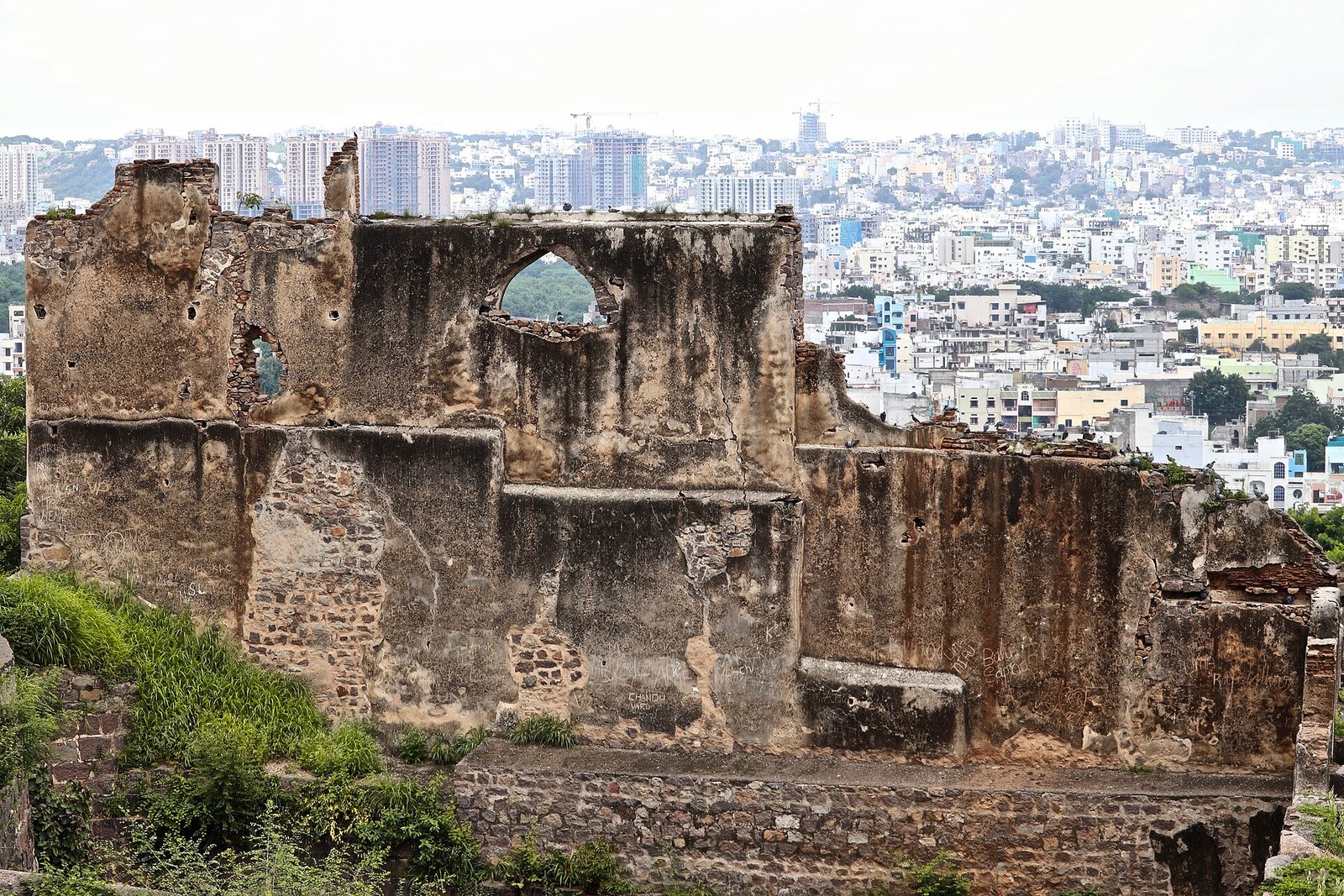
Sieges are what most forts become famous for. However, far more people ever saw a fort than ever assaulted it. Whether it is the garrison atop a rocky outcrop along a trade route, a gateway which any traveller would need to cross, or a visible wall many miles away – all those are the means by which a fort spoke volumes about its owner to the rivals, allies and subjects well before any armies came near. This article is trying to understand Indian forts in this light, as devices designed to convey capability, strength and costliness of an attack.
Raigad: Geography, Sovereignty and Military Authority
Firstly, Raigad will be examined. Shivaji captured the hill known as Rairi from Chandrarao More in 1656 and transformed it into Raigad. It served as Shivaji’s main base and location of his coronation in 1674; these facts are confirmed both by Maratha chronicles and Satish Chandra’s Medieval India.[i] The fort stands on the top of a steep Sahyadri massif of approximately 820 meters height with almost vertical scraping everywhere but the southern side.[ii] The main entrance is the Maha Darwaja gateway which is flanked by bastions. The inner space houses royal complex, market street and Jagdishwar temple.[iii]
As the signal, Raigad was a rock whose capture was possible only under significant cost. The audience was made of Mughal and Bijapuri commanders thinking about whether to attack, as well as Maratha chiefs and subjects evaluating their loyalty. Thus, the strategic outcome was the combination of deterrence by cost and legitimacy coming from the permanently established seat of power.
The most obvious tie between fort and authority is the coronation itself. The fact that Shivaji chose a fort as the place of his sovereignty is a fact; that the place chosen was meant to broadcast it is reasonable but not documented.[iv]
Golconda: Fortification, Wealth and the Cost of Conquest
The second example is Golconda. It was the capital of the Qutb Shahi dynasty till their court moved to Hyderabad in 1591 and stayed a citadel and treasury.[v] In Architecture and Art of the Deccan Sultanates, Michell and Zebrowski describe a granite hill surrounded by a series of lines of fortifications, with the outer one stretching for several kilometers and massive gates like the Fateh Darwaza. Fort gates in the Deccan typically featured iron spikes to fend off elephants. Aurangzeb besieged the fort for about eight months in 1687; sources agree that it fell in the end because of treachery – a gate opened from inside.[vi]
One popular legend holds that a clap of hands could be heard from the entrance portico at the topmost pavilion and used as an alarm. That is widely repeated, but not corroborated by historical evidence, thus it must be considered a legend.
Reading this example as a signal, Golconda represents a hilltop citadel surrounded by concentric lines of fortification and linked to a prosperous city and diamond trade. This means that the dynasty is rich, organized and ready, that the attacker will have to break several lines, not one. Audiences here were Mughals and neighboring sultanates, along with merchants and noblemen dependent on the court. The effect was deterrence and reassurance – confidence that the state was able to defend its commerce and treasury.
The 1687 siege shows the limits of signaling. Fortification raises the cost of attack, but does not prevent an empire ready to pay.[vii]
Gwalior: Height, Visibility and Political Authority
The third example is Gwalior. It consists of a sandstone plateau rising some 100 meters above the plain and stretching for about three kilometers. It is protected by the Archaeological Survey of India and boasts documentation among the fullest of all Indian forts. Under the reign of Man Singh Tomar (1486-1516), it acquired the Man Mandir palace with glazed-tile decoration and impressive entry. Babur’s memoirs call it a pearl of Hind fortresses. Catherine Asher places such fortresses in the Mughal imperial system, and the Mughals subsequently used it as a state prison for important political prisoners.[viii]
If understood as a symbol, Gwalior was a mountain which looked down on the corridor connecting the Gangetic plain, Malwa, and the Deccan. The implication of the mountain was that anyone who possessed it had eyes on the movements of troops and trade, and the presence of the palace indicated that it was both a military camp and a court. The visitors to the mountain were the competing kings using the corridor, followed by the Mughals and political prisoners.
Five Strategic Messages of Indian Fortresses
On consideration, the three cases seem to imply five types of message. All these are interpretations; however, they are based on the physical and documentary evidence.
One way to achieve this purpose was through fortresses which signified strength and readiness. Their height, strong walls and multiple gateways indicated that they were built in anticipation of defense. The intended audience was the enemy commanders.
Secondly, they served to demonstrate the possession of territory and passage ways. Fortresses atop mountain passes and roads conveyed the message of who had the power to levy taxes and obstruct the way. This message was directed at rival traders and kingdoms.
Thirdly, it served as a way of establishing political power. This is because palaces, temples, markets and ceremonies within the fort were symbols of power, and the subjects were the ones who were watching this display.
Fourth, they could deter. The apparent difficulty of the assault would tell an attacker the price of a siege in terms of time, manpower and logistics. Rival armies were the audience, and the effect would be to make the assault more expensive.
Lastly, there was the psychological impact. A fort could instil confidence in allies and subjects while sowing doubts in the minds of potential attackers. In all three cases, the audience would be the same and the effect would be apparent in the form of morale, loyalty and hesitation.
Conclusion
Raigad, Golconda and Gwalior were certainly military forts, but they were also sights to behold, approaches that were difficult and conversations that took place in the process. Their location, height, walls, gates and size spoke simultaneously to rival armies, subject peoples and allies. While the concept of strategic signaling can serve well to capture this effect, we are dealing here with our language and our understanding of it. Historical evidence reveals significant investments in forts, both as sites of defense and power. Interpretation of such sites as instruments that could help win contest even before the fight had begun appears logical. A siege like the one at Golconda reminds us that a signal may fail. Historians must co
Notes
[i]M. R. Singh and Rajendra Yadav, “Microstructural Analysis and Characterization of Lime Mortar of Seventeenth Century Raigad Hill Fort from Western India,” Indian Journal of History of Science 56 (2021): 218.
[ii] Singh and Yadav, “Microstructural Analysis,” 218.
[iii] Archaeological Survey of India, “Progress and Challenges of Conservation, Restoration and Excavation of Raigad Fort,” Press Information Bureau, December 19, 2024. The report identifies the Maha Darwaza, Simhasana, Nagarkhana, Jagdishwar Temple and Bazarpet among the structures at the fort.
[iv] Singh and Yadav, “Microstructural Analysis,” 218
[v] George Michell and Mark Zebrowski, Architecture and Art of the Deccan Sultanates (Cambridge: Cambridge University Press, 1999), 23–62
[vi] A. K. Goel, Rekha Pande, Ravulapati Madhavi, and Zareena Parveen, Telangana: Land and People from 1323 CE to 1724 CE, vol. 2 (Hyderabad: Dr. Marri Channa Reddy Human Resource Development Institute, 2023), 240–41.
[vii] Goel et al., Telangana: Land and People, 240–41.
[viii] Government of India, Census of India 1961, District Census Handbook: Gwalior, historical account of Gwalior Fort.