

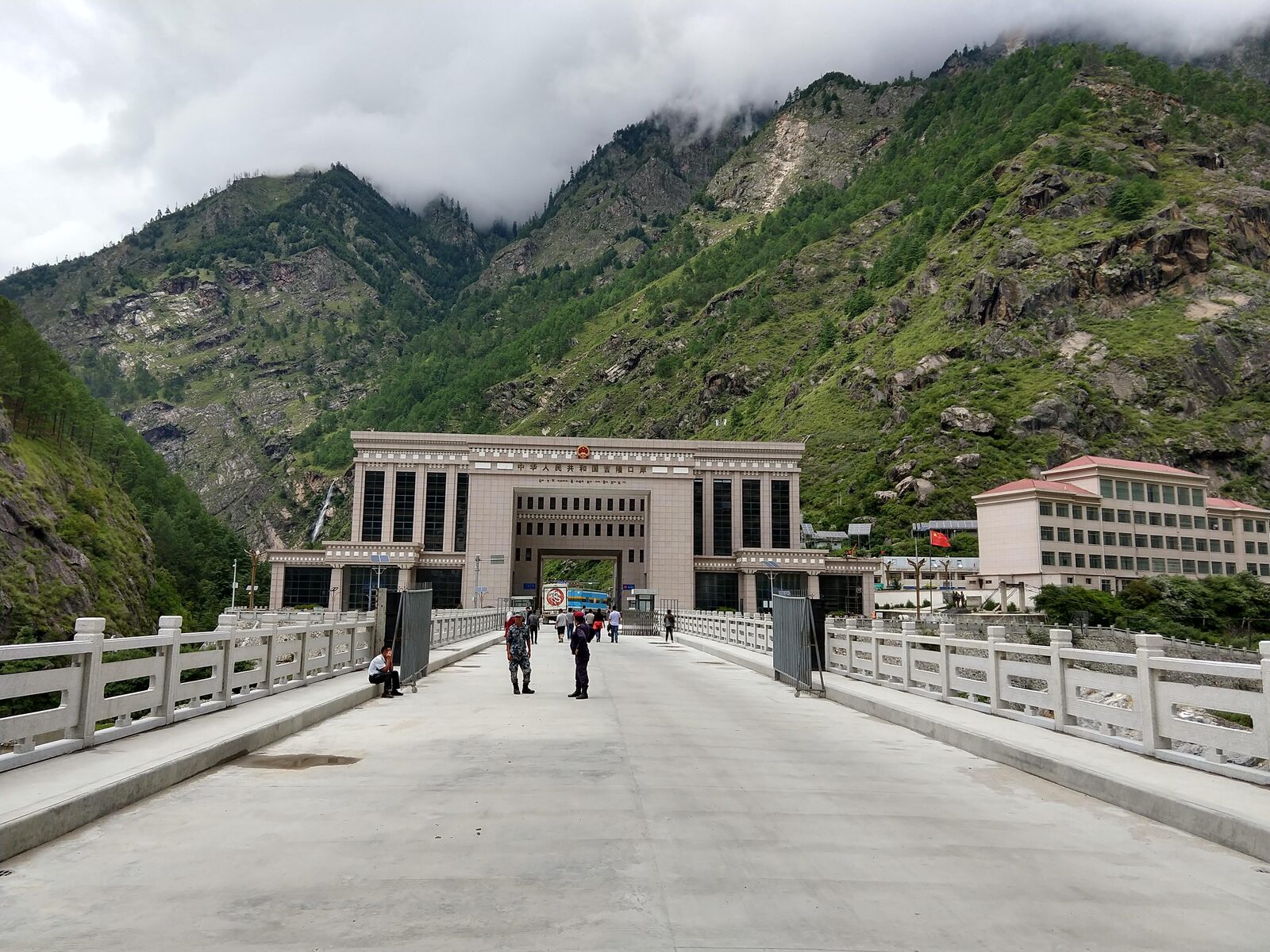
Situated between China and India, Nepal holds a unique position in the Himalayan strategic environment and has always sought to safeguard its autonomy by keeping connections with both states. Beijing views Nepal as a neighbor, a gateway to South Asia, and a politically sensitive state that borders the Tibet Autonomous Region. Engaging with China gives Kathmandu the chance to expand its economic, transportation, and development alliances beyond its long-standing reliance on India. As a result, infrastructure has become one of the main tools used by China and Nepal to deepen their bilateral ties. However, China's infrastructure diplomacy in Nepal is more than just a business venture. Because connection can alter political decisions, economic reliance, and the geopolitical topography of the Himalayas, it also has strategic significance.
Strategic Narratives: Development, Connectivity and Sovereignty
China's relationship with Nepal is supported by a number of related storylines. The first is the development narrative, in which China portrays itself as a partner that can use infrastructure, investment, technology, and connection to assist Nepal in overcoming the limitations imposed by the challenging Himalayan topography. Nepal has stated time and time again that connection and infrastructure are essential to its development goals.[1]
The interconnectedness narrative is the second. Facilities connection, trade connectivity, financial integration, and people-to-people connectivity were noted as key areas of collaboration in the 2017 Nepal-China Memorandum of Understanding on cooperation under the Belt and Road Initiative (BRI). In particular, it mentioned electrical grids, highways, railroads, civil aviation, and information and communications infrastructure.[2]
The third is a narrative of non-interference and sovereignty. Chinese diplomacy places a strong emphasis on respecting each nation's development choices, territorial integrity, and sovereignty. Nepal, which is especially sensitive to perceptions of outside meddling, may find this strategy appealing. Therefore, economic opportunity is combined with a political vocabulary of equality, reciprocity, and respect for sovereign decision-making in Beijing's rhetoric.
Because infrastructure is more than just physical, these narratives are strategically significant. Long-term networks of business, technology, finance, and political engagement can be established through it. As a result, the strategic impact of infrastructure may go well beyond a project's immediate financial gains.
Infrastructure Diplomacy in Practice
Prior to the official BRI framework, China was involved in Nepal's infrastructure. Araniko Highway, Syaphrubesi-Rasuwagadhi Road, improvements to the Kathmandu Ring Road, border infrastructure, and Pokhara International Airport are examples of cooperation. In recent times, the projected Trans-Himalayan Multi-Dimensional Connectivity Network and cross-border connectivity have taken center stage in the bilateral agenda.[3]
This collaboration was given a more organized foundation by the December 2024 Framework for Belt and Road Cooperation. The Tokha-Chhahare Tunnel, Hilsa-Simikot Road, Kimathanka-Khandbari Road and bridge, and other infrastructure and urban development projects are on its first project list. Additionally, the framework emphasizes "value for money" and technical, financial, commercial, and economic viability, indicating that project viability is formally acknowledged as a significant factor.[4]
Rail connectivity is still very important. The strategic significance of a possible China-Nepal railroad that would connect Kathmandu with the Tibetan network significantly beyond its current degree of physical implementation. Such a link might lessen Nepal's physical isolation and offer an alternate route for trade and transit if it is both technically and economically feasible. However, the strategic importance of the Himalayan railroad should not be mistaken with its immediate operating capabilities due to its size and engineering difficulties.
From Infrastructure to Strategic Influence
Influence can be produced through infrastructure diplomacy in a number of ways. First, it establishes economic interconnectedness. Long-term partnerships including Chinese businesses, technology, and funding can be established through roads, ports, power systems, telecommunications networks, and border infrastructure. Second, by providing Kathmandu with alternatives to well-established routes via India, connectivity can change Nepal's strategic options. Third, China's reputation as a development partner can be strengthened via prominent infrastructure projects.
This does not imply that political dominance is a direct result of infrastructure. According to a 2021 Carnegie Endowment research, Nepal and other South Asian nations have managed Chinese participation with agency, and Nepal has generally chosen its finance partners well.[5] This is especially crucial when talking about the popular notion of "debt-trap diplomacy." An oversimplified depiction of Chinese financing as the primary source of Nepal's external debt is not supported by the country's debt profile. According to the IMF's 2026 debt analysis, at the end of 2025, bilateral creditors made up only 4.7 percent of Nepal's total public debt, with China's Export-Import Bank accounting for roughly 1.2 percent of that total. Multilateral creditors made up 43.1 percent.[6]
Therefore, the more important question is whether continued infrastructure engagement can progressively increase Beijing's political, economic, and strategic influence rather than whether China can "take over" Nepal through debt.
Implications for India
China's expanding infrastructure involvement in Nepal has significant geopolitical and security ramifications for India. The strategic geometry of the Himalayan region may be altered by Nepal's northern connectivity with Tibet, especially if road, rail, telecommunication, and energy links become more integrated. In a contingency, infrastructure that enhances civilian mobility and trade may also be strategically or dual-use relevant; however, these possibilities should be evaluated on a project-specific basis rather than presumed.
However, India continues to hold a significant position in Nepal. The connection, according to India, is based on deep historical, cultural, economic, and people-to-people links and is still a significant development and connectivity partner.[7] Nepal's transportation and trade infrastructure is also closely linked to India. For instance, the World Bank has shown how improvements in the Nepal-India corridor have shortened border processing and transportation delays, highlighting the ongoing economic significance of southern connectivity.[8]
Therefore, India should make its own development cooperation more competitive, timely, and sensitive to Nepal's goals rather than trying to exclude Chinese infrastructure. Nepal may have additional strategic options thanks to faster cross-border rail and road project execution, improved energy connectivity, digital infrastructure, and more effective project delivery.
Nepal’s Strategic Autonomy
Ultimately, Nepal shouldn't be viewed as just a venue for rivalry between China and India. Kathmandu has its own objectives, including infrastructure modernization, economic growth, a variety of transit alternatives, and the maintenance of its sovereignty. Cooperation with China does not prevent cooperation with other nations, as stated expressly in the 2024 China-Nepal BRI framework.[9]
This offers a crucial clue to Nepal's balancing approach. While keeping close strategic and commercial ties with India and other development partners, Kathmandu is probably going to keep looking for advantages from Chinese connectivity. As a result, in addition to Beijing's resources, Nepal's internal politics, project economics, public opinion, and institutional competence will all have an impact on how long China's influence lasts.
Conclusion
China's infrastructure diplomacy in Nepal should therefore be viewed as a type of strategic statecraft that blends political narratives, development, and connectivity. In addition to providing Nepal with economic benefits, roads, tunnels, airports, border facilities, energy networks, and possible railroads can increase China's long-term influence in the Himalayan area.
However, there is more to the strategic picture than just Beijing and New Delhi competing. Only a small percentage of Nepal's external debt is financed by China, the country maintains its agency, and the viability and execution of numerous connectivity projects are still in doubt. Therefore, India's policy task is not to stop Nepal-China connectivity but to make sure that India continues to be a trusted and favored partner through quicker delivery, deeper economic integration, and more awareness of Nepal's strategic autonomy.
Thus, the growing rivalry in Nepal extends beyond infrastructure. Connectivity networks, growth models, political narratives, and the strategic options accessible to a Himalayan state are becoming increasingly competitive.
References
- Ministry of Foreign Affairs, Government of Nepal. “Nepal-China Relations.” March 11, 2026. https://mofa.gov.np/content/1450/nepal-china-relations/
- Ministry of Foreign Affairs, Government of Nepal. “Press Release on Signing Ceremony of Memorandum of Understanding (MOU) on Cooperation under the Belt and Road Initiative.” May 12, 2017. https://mofa.gov.np/content/626/press-release-on-signing-ceremony-of-memorandum/
- Ministry of Foreign Affairs, Government of Nepal. “Joint Statement between the People’s Republic of China and Nepal.” December 3, 2024. https://mofa.gov.np/content/203/joint-statement-between-the-people-s-republic-of/
- Ministry of Foreign Affairs, Government of Nepal. “Framework for Belt and Road Cooperation between the Government of Nepal and the Government of the People’s Republic of China.” December 27, 2024. https://mofa.gov.np/content/641/framework-for-belt-and-road-cooperation-between/
- Pal, Deep. “China’s Influence in South Asia: Vulnerabilities and Resilience in Four Countries.” Carnegie Endowment for International Peace, October 13, 2021. https://carnegieendowment.org/research/2021/10/chinas-influence-in-south-asia-vulnerabilities-and-resilience-in-four-countries
- International Monetary Fund. Asia and Pacific Department. “Nepal: 2026 Article IV Consultation and Seventh Review under the Extended Credit Facility Arrangement—Press Release; Staff Report; Staff Supplement; and Statement by the Executive Director for Nepal.” IMF Staff Country Reports 2026, no. 127. June 8, 2026. https://www.imf.org/en/publications/cr/issues/2026/06/08/nepal-2026-article-iv-consultation-and-seventh-review-under-the-extended-credit-facility-576691
- Embassy of India, Kathmandu. “About India-Nepal Relations.” Accessed October 7, 2026. https://www.indembkathmandu.gov.in/about-india-nepal-relations
- World Bank. “Increasing Connectivity for Enhanced Food Supply Chain Resilience.” April 11, 2024. https://www.worldbank.org/en/results/2024/04/11/increasing-connectivity-for-enhanced-food-supply-chain-resilience
- Hayashi, Tadateru, Sanchita Basu-Das, Manbar Singh Khadka, Ikumo Isono, Souknilanh Keola, and Kenmei Tsubota. Economic Impact Analysis of Improved Connectivity in Nepal. South Asia Working Papers. Manila: Asian Development Bank, November 2020. https://www.adb.org/publications/economic-impact-analysis-connectivity-nepal