

Introduction
The Revolt of 1857 occupies a defining place in the history of resistance to British rule in India. Yet it was neither the first nor the last occasion on which Indian soldiers serving under the colonial state challenged military authority. From the Vellore rising of 1806 to the refusal of soldiers to fire on civilians at Peshawar in 1930, the British Indian military experienced repeated episodes of collective disobedience, mutiny and protest. Their scale, causes and political meanings differed. Some arose from pay and service conditions; others reflected religious anxieties, wartime loyalties or opposition to the use of troops against fellow Indians. Taken together, they reveal a persistent tension at the heart of colonial rule: the empire depended on Indian soldiers, but could never take their obedience for granted.
Before 1857: Vellore, Barrackpore and the question of service
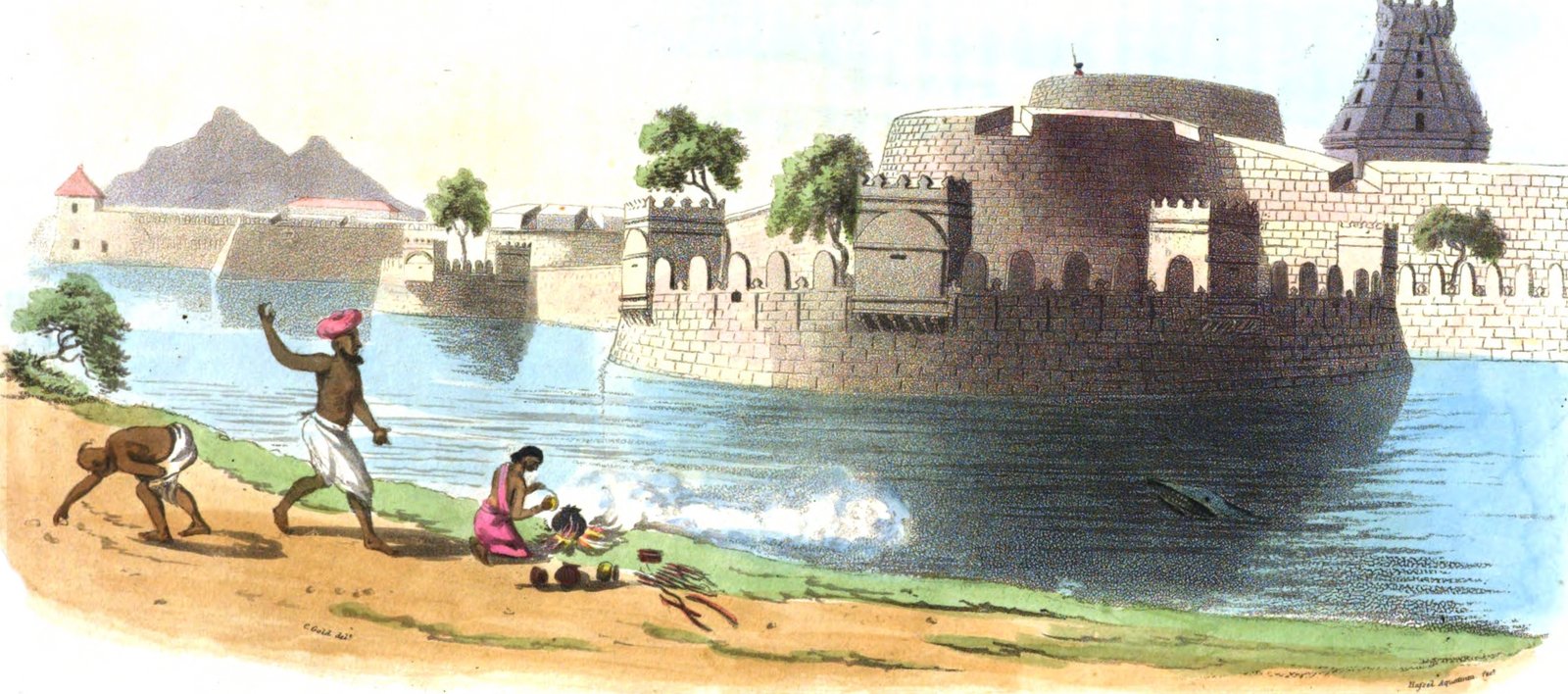
On 10 July 1806, sepoys at Vellore Fort rose against the East India Company’s authority. New dress regulations introduced in the Madras Army restricted customary marks and forms of appearance and required a new style of turban. Many soldiers interpreted the measures as an assault on religious and social identity. During the uprising, soldiers attacked European officers and troops and raised a flag associated with the family of Tipu Sultan, whose sons were held at Vellore. British reinforcements from Arcot, led by Colonel Robert Rollo Gillespie, suppressed the revolt with great violence. Vellore demonstrated the danger of imposing military uniformity without regard for the beliefs of Indian troops.¹
The Barrackpore refusal of 1824 exposed a different source of discontent. The 47th Bengal Native Infantry resisted orders to march for the First Anglo-Burmese War. The prospect of crossing the sea raised fears among some high-caste Hindu soldiers about loss of caste status; disputes over transport and allowances also contributed. The regiment was disarmed and the protest was brutally suppressed. In 1844, four Bengal regiments refused to proceed to Sindh unless additional allowances, or batta, were restored. A Madras cavalry regiment also protested over service far from home without the expected extra payment. These episodes were not movements for national independence, but they show how questions of pay, distance, religious practice and the terms of enlistment could become collective military grievances.²
1857: A watershed, not an isolated event
The uprising that began at Meerut on 10 May 1857 was different in scale and consequence. The controversy over the Enfield rifle cartridges intensified existing fears, but the revolt spread beyond the barracks. Dispossessed rulers, landlords, peasants and townspeople joined the resistance in different regions. Delhi became a central focus under the symbolic authority of Bahadur Shah Zafar, while leaders including Rani Lakshmibai, Nana Sahib, Begum Hazrat Mahal and Kunwar Singh emerged in the struggle. Its suppression brought the end of East India Company rule and the transfer of authority to the British Crown in 1858. The subsequent reorganisation of the army sought to prevent another comparable combination of troops. It did not, however, eliminate dissent within the ranks.³
After 1857: Mutiny as everyday military dissent
Research by historian David Omissi identifies a series of smaller mutinies in the Indian Army between 1886 and 1930. His account is important because it distinguishes these localised incidents from 1857: most involved a company or part of a battalion, were short-lived, and arose from immediate unit grievances rather than a coordinated nationalist programme. In 1886, men of the 3rd Gurkhas at Almora protested after a reduction in their customary rice allowance. Their complaints also concerned food and fuel costs, inadequate cooking facilities and leave. In 1894, sections of the 17th Bengal Infantry at Agra and the 25th Madras Infantry in Burma resisted changes to their messing arrangements. In 1897, protests occurred among the 14th Bombay Infantry at Bareilly and the 17th Bombay Infantry at Bhuj, as well as the 27th Madras Infantry at Moulmein. These cases underline the importance of seemingly routine matters—food, accommodation, leave, allowances and regimental custom—in sustaining military discipline.⁴
The pattern continued overseas. In 1910, around 200 men of the 76th Punjabis at Tientsin in China were involved in a mutiny. During the First World War, wartime deployment and religious loyalties produced further strains. In January 1915, Pathan companies of the 130th Baluchis at Rangoon resisted service against the Ottoman Empire, whose Sultan was also the Caliph. British parliamentary records later confirmed that the regiment had been sent to Rangoon following earlier insubordination; after further unrest, two soldiers were executed and 202 received sentences of transportation. The episode illustrates how the war’s international and religious dimensions could complicate the assumptions of imperial military loyalty.⁵
On 15 February 1915, the 5th Light Infantry mutinied in Singapore. The rising involved a substantial part of the regiment, and soldiers attacked British personnel and sought to free German prisoners of war. British authorities needed assistance from allied naval forces to restore control. The mutiny was suppressed and a number of soldiers were executed after trial. Other incidents followed: the 15th Lancers experienced serious indiscipline at Basra in 1916, while further mutinies were recorded among Indian units serving in Mesopotamia and China in 1917 and 1918. These events show that the geography of military dissent extended well beyond India, following Indian regiments wherever imperial service took them.⁶
Peshawar, 1930: Refusal to fire
One of the most politically resonant episodes occurred on 23 April 1930, during the Civil Disobedience Movement in Peshawar. Two platoons of the 2/18th Royal Garhwal Rifles refused to fire on demonstrators at Qissa Khwani Bazaar. The action is commonly associated with Havildar- Major Chandra Singh Garhwali and became a powerful example of soldiers refusing to use force against unarmed civilians. The men were arrested and court-martialled; several received lengthy sentences. The precise circumstances and the wording of the orders remained contested in official and later accounts, so the incident should not be simplified into an uncomplicated, regiment-wide nationalist revolt. Nevertheless, it exposed the limits of colonial command when soldiers were ordered to act against fellow Indians.⁷
The history of military resistance under British rule cannot be reduced to 1857. Vellore, Barrackpore, the allowance disputes of the nineteenth century, the wartime mutinies overseas and the Garhwali refusal at Peshawar were not identical events. Nor did every soldier who mutinied necessarily act from nationalist conviction. Their significance lies precisely in their variety. They reveal how religious concerns, economic grievances, regimental traditions, wartime loyalties and political conscience could all unsettle the colonial military system. The British Indian Army was a principal instrument of imperial power, but it was never simply an obedient instrument. 1857 was a watershed; it was not the whole story.
Notes
- British Library, India Office Records, IOR/H/507, “Vellore Mutiny,” correspondence and papers, July–August 1806; W. J. Wilson, History of the Madras Army, vol. 3 (Madras: Government Press, 1882), chap. 18.
- R. C. Majumdar, The Sepoy Mutiny and the Revolt of 1857 (Calcutta: Firma K. L. Mukhopadhyay, 1957); “The Causes of the Mutiny,” in The Cambridge History of India, vol. 5 (Cambridge: Cambridge University Press, 1922), discussion of the Barrackpore and Sindh disturbances.
- National Army Museum, “Why Did the Indian Rebellion Happen?,” https://www.nam.ac.uk/explore/why-did-indian-mutiny-happen.
- David Omissi, The Sepoy and the Raj: The Indian Army, 1860–1940 (London: Macmillan, 1994), 134–52.
- House of Commons, Parliamentary Debates, 29 July 1920, “130th Baluchis Regiment (Insubordination)”; Government of India, Sedition Committee Report (Calcutta: Superintendent Government Printing, 1918), discussion of the Rangoon plot.
- Tim Harper, “Singapore, 1915, and the Birth of the Asian Underground,” Modern Asian Studies 47, no. 6 (2013): 1782–1811, https://doi.org/10.1017/S0026749X1300036X; Omissi, The Sepoy and the Raj, 134–52; House of Commons, Parliamentary Debates, 21 July 1920, “15th Lancers.”
- Sayed Wiqar Ali Shah, “The 1930 Civil Disobedience Movement in Peshawar Valley,” South Asian Studies 28, no. 1 (2013): 95–110; Jawaharlal Nehru, “Help for a Member of the Garhwal Regiment,” 6 April 1958, The Nehru Archive.